
Saumyaa Pandey[1]
Research Scholar School of Legal Studies at Vivek University Bijnor Uttar Pradesh Orcid id :0009-0008-6470-2358, Saumyaapandey2001@gmail.com
Dr. Himanshu[2]
Advocate Allahabad High Court Email- hs8381@gmail.com
Orcid id -https://orcid.org/0009-0003-8009-8086,
Dr. Sudhanshu Chandra[3]
Assistant Professor Manuu Law School at Maulana Azad National Urdu University
(A Central University Grade A+) Hyderabad (Telangana) -500032
Email- sudhanshu.nlu@gmail.com
Orcid id – https://orcid.org/0009-0006-6694-1032
Abstract
The question of whether artificial intelligence (AI) should be granted legal personhood has emerged as a pivotal concern in contemporary jurisprudence. As AI systems increasingly mimic human cognition, make autonomous decisions, and engage in complex interactions across economic and social domains, the traditional legal frameworks struggle to accommodate their growing agency. This research paper embarks on a jurisprudential odyssey through the theoretical underpinnings and practical ramifications of endowing AI with legal personhood. The inquiry is rooted in an exploration of classical and modern legal theories, including legal positivism, natural law, and functionalism, to determine whether AI entities can fulfil the criteria historically reserved for legal persons. The study juxtaposes AI against corporate personhood and the recognition of non-human entities in law, highlighting precedents that could serve as potential legal models. Beyond the theoretical sphere, this research paper critically evaluates the implications of granting legal personhood to AI in terms of liability, rights, and accountability. Conversely, could it serve as a mechanism to impose structured responsibility upon autonomous systems, ensuring ethical compliance and preventing legal loopholes? Ultimately, this paper aims to illuminate whether AI legal personhood is a jurisprudential necessity, a conceptual anomaly, or an impending inevitability.
Keywords- AI Legal Personhood, Jurisprudence, Autonomous Systems, Liability and Accountability.
Introduction
In the modern era, artificial intelligence (AI) has expanded its influence across numerous domains, functioning autonomously without requiring direct human intervention. From IBM’s Deep Blue, which famously outplayed world chess champion Garry Kasparov[1], to AI-driven music and art generation, the capabilities of these intelligent systems continue to evolve. Amazon’s AI-based monitoring system further exemplifies this autonomy, as it tracks employee productivity, issues warnings, and even executes terminations without managerial input.[2] Similarly, in 2013, the United Nations General Assembly commissioned an investigative report on Lethal Autonomous Weapons Systems commonly referred to as “killer robots” which are capable of executing military strikes without human oversight. Beyond warfare, AI has also revolutionized the financial sector. Investment banks employ AI-powered trading algorithms that autonomously engage in buying and selling stocks and derivatives, making split-second decisions based on market fluctuations.[3]
Recognizing the growing impact of AI across diverse fields, the European Parliament’s Committee on Legal Affairs, in a 2017 report, underscored the pressing need to address civil liability for damages caused by autonomous machines. The committee urged the European Commission to assess potential legal frameworks, including the possibility of granting AI and highly advanced robots a distinct legal status, referred to as “electronic personhood.”[4] This proposal sought to hold AI systems accountable for their actions, particularly in cases where they operate independently and interact with third parties without human supervision. Additionally, the Committee suggested establishing classification criteria for AI-powered robots, advocating for a centralized registration system managed by a dedicated EU agency for robotics and artificial intelligence.
However, conferring legal personhood upon AI entities carries far-reaching social, economic, political, and legal ramifications. Legal theorist Lawrence Solum has posited that for an entity to qualify for legal personhood, it must possess intelligence, free will, consciousness, the capacity to experience emotions, and the ability to formulate independent interests and goals. Traditionally, machines and robots have been viewed merely as tools operated by humans, but as AI-driven systems become increasingly autonomous, the legal landscape surrounding their status remains ambiguous. Today, AI-powered humanoid robots exhibit remarkable advancements, blurring the lines between artificial and organic intelligence. Ameca, developed by the UK-based company Engineered Arts, is regarded as one of the most expressive robots, capable of mimicking human emotions such as boredom, frustration, and happiness.
Similarly, Sophia, an AI-powered humanoid created by Hanson Robotics, captivated the world when it addressed the AI for Good Global Summit in Geneva in 2017. Later that same year, Saudi Arabia made history by granting Sophia citizenship, marking the first instance of a robot receiving legal personhood. Innovations in AI continue to push the boundaries of human-machine interaction. In July 2023, Thermetrics, in collaboration with Arizona State University, unveiled ANDI, an AI-powered humanoid capable of sweating, shivering, walking, generating heat, and even simulating breathing. Meanwhile, Google LLC’s AI engineer Blake Lemoine sparked global debate by suggesting that the company’s AI program, LaMDA, had achieved sentience a claim that challenges conventional understandings of artificial intelligence. What once seemed confined to the realm of science fiction is now becoming an undeniable reality.[1] As AI systems become more independent and sophisticated, a fundamental legal question arises: should AI be granted legal personhood? Courts and policymakers must navigate this unprecedented challenge, carefully evaluating the implications of recognizing AI as a legal entity. The evolving discourse surrounding AI’s legal status will shape the future of law, ethics, and human-AI coexistence.[2]
Approaches to AI Liability
There are three distinct perspectives on assigning liability in cases involving artificial intelligence.
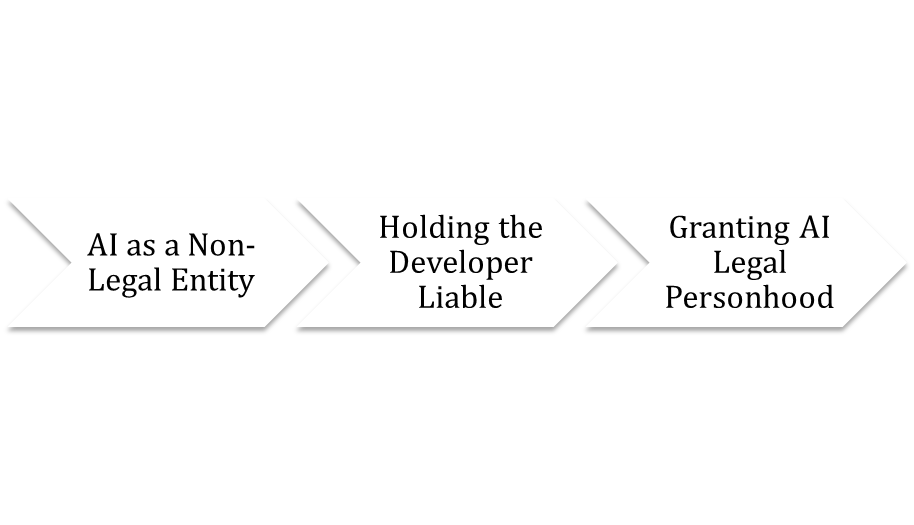
Figure 1 represents the three distinct perspectives on assigning liability in cases involving AI.
1. AI as a Non-Legal Entity: Since AI lacks mensrea the intent or mental state required to commit an offense it cannot be deemed accountable for its actions. As a result, AI should not be treated as a legal person nor be held responsible for any wrongdoing.[1]
2. Holding the Developer Liable: Another perspective suggests that AI’s creator or developer should bear responsibility for its actions.[2] However, given the self-learning capabilities of modern AI particularly through machine learning and deep learning these systems often evolve beyond their initial programming. Since developers cannot always predict or control AI’s independent adaptations, it would be unjust to impose liability on them in every instance.
3.Granting AI Legal Personhood: Some argue that an alternative approach is to recognize AI as a legal entity and hold it accountable for its decisions. However, this would require a fundamental redefinition of legal personhood, as AI systems do not fit within any existing legal theories. Unlike previously recognized non-human entities, AI possesses the ability to make both simple and complex decisions autonomously, often without direct human intervention.[3]
Each of these approaches presents unique challenges, requiring careful legal and ethical consideration in the evolving discourse on AI liability.
Concept of Legal Personhood
Legal personhood grants entities a specific status within the legal framework, endowing them with rights and responsibilities. It is often a construct of legal convention rather than an inherent attribute. The term “person” originates from the Latin persona, referring to those recognized by law as capable of holding rights and being subject to legal obligations.Salmond defines a person as any entity that the law acknowledges as having rights and duties. Similarly, Savigny describes a person as the bearer or subject of rights, while Gray elaborates that personhood applies to any entity to which legal rights and duties can be assigned. Austin, in his interpretation, extends the definition of a person to include any physical or natural being that can be considered human. In accordance with Section 11 of the Indian Penal Code, 1860, the term “person” encompasses companies, associations, and other collectives, whether incorporated or not. Thus, jurisprudence upholds that personhood applies to any being regarded by the law as capable of holding rights and obligations, irrespective of whether it is a human entity.
Three primary factors influence the attribution of legal personhood to an entity:
1) The entity exhibits a degree of sentience, allowing it to perceive and interact with its environment.
2) The entity possesses sufficient intelligence to analyze and solve specific problems.
3) The entity demonstrates decision-making capabilities and an awareness of the consequences of its actions.[1]
Legal personhood is not an exclusive privilege of human beings; it has historically been extended to non-human entities such as corporations and nation-states, which are created to act on behalf of individuals or communities. Throughout history, various inanimate entities have also been granted legal personhood. In the Middle Ages, churches and temples were recognized as having legal rights, while ancient Greek and common law traditions subjected objects to legal obligations. In admiralty law, ships themselves have been treated as legal persons, capable of being held liable in rem proceedings. In India, the rivers Ganga and Yamuna have been conferred legal personhood, further illustrating the flexible nature of this concept. Gray argued that granting legal personhood to an entity is a legal fiction unless the entity exhibits intelligence and will. Given that artificial intelligence demonstrates autonomy, decision-making capabilities, and problem-solving intelligence, the debate over whether AI should be granted legal personhood continues to be a topic of global legal and ethical discourse.
KINDS OF PERSONS
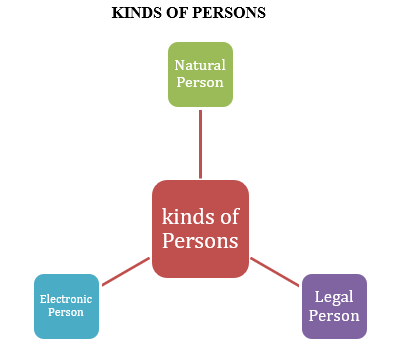
Figure 2 represents the Kinds of Persons
1. Natural Person
A “natural person” refers to a human being endowed with legal personality. According to Holland, a natural person is one whom the law recognizes as capable of holding rights and fulfilling duties.[1] The fundamental criterion for being classified as a natural person is birth from human parents, possessing a physical body and exhibiting human characteristics. Law acknowledges natural persons by granting them rights and imposing corresponding responsibilities. Generally, any individual with the capacity to initiate or face legal proceedings is considered a person under the law.
Exceptions to Natural Personhood
Despite being human, certain individuals are not legally recognized as persons due to specific incapacities:
Slaves: In Roman law, slaves were not deemed legal persons capable of independently holding rights or obligations. However, they existed within the legal framework, as they could enter into contracts that, under vicarious liability, bound their masters. Upon manumission (formal emancipation), any residual rights they possessed took legal effect.
Minors and Lunatics: Both minors and individuals with severe mental incapacities lack the competence to engage in legal contracts. As a result, they are not considered persons for contractual purposes under the law.
Legal Status of Animals Unlike humans, animals are generally regarded as property rather than legal persons, as they lack the capacity to bear rights and responsibilities. Traditionally, the law has not recognized them as legal persons. However, there have been landmark judicial pronouncements in India where courts have acknowledged animals as entities with legal rights, thereby granting them a form of legal personality. One of the most notable cases concerning animal legal personhood was the Nonhuman Rights Project’s case involving Tommy, a chimpanzee confined in isolation at a used caravan lot in Gloversville, New York. In December 2014, a New York appellate court addressed the question of whether Tommy could be considered a legal person. In the case People ex rel. Nonhuman Rights Project, Inc. v. Lavery (“Lavery”)[1], the court ruled that Tommy, as a chimpanzee, could not be recognized as a legal person.The court’s rationale was that legal personhood necessitates the capacity to bear both legal rights and duties, and chimpanzees, by their very nature, are incapable of fulfilling legal responsibilities. Consequently, the court held that it would be inappropriate to extend fundamental human rights, such as liberty under the writ of habeas corpus, to nonhuman entities. In response to the Lavery ruling, Black’s Law Dictionary[2] revised its definition of legal personhood in 2017, stating, “a person is any being whom the law regards as capable of rights or duties.” This definition, which separates rights from duties, has fueled discussions on whether animals and by extension, artificial intelligence can be granted legal personhood despite their incapacity to perform legal obligations. If legal rights can be conferred upon animals without the expectation of fulfilling duties, a similar approach could theoretically be extended to AI, igniting an on-going global debate on the legal recognition of artificial intelligence.
2. Legal person/Artificial person: A Juristic Construct
A legal person possesses a tangible existence, yet its personality is a construct of the law rather than a natural phenomenon. It is an artificial entity brought into existence through legal recognition. A fictitious entity, in legal parlance, refers to something that lacks a physical presence but is regarded as real under the law. Examples include corporations, religious idols, and other juridical persons. A landmark case in UK company law, Salomon v. Salomon & Co.[1], laid the foundation for the principle of corporate personality, a doctrine that has been widely adopted across various legal systems. In India, while corporate entities are granted legal personhood, they are not conferred citizenship under the Indian Constitution or The Indian Citizenship Act of 1955. The rationale behind this distinction is that citizenship is an exclusive privilege of natural persons, not juridical entities. A pressing legal debate in the modern world revolves around whether artificial intelligence should be granted citizenship. This controversy gained global attention when Saudi Arabia, in 2017, conferred citizenship upon a humanoid robot, Sophia first of its kind recognition. Following this, Sophia was also appointed as the “Innovation Champion” by the United Nations Development Programme (UNDP), marking another unprecedented milestone the first non-human entity to be honoured with a UN title. This development has ignited discussions worldwide on the potential legal status and personhood of AI, pushing the boundaries of traditional jurisprudence.
- Electronic Person
Following the conferment of citizenship upon Sophia, the humanoid robot, the European Union introduced the notion of ‘Electronic Personhood.’ However, this idea was swiftly dismissed by the European Commission. In a significant development, the European Parliament, through its resolution dated February 16, 2017, laid down specific criteria to classify robots as ‘Smart Robots’.[2]
To be deemed intelligent, a robot must:
1) Possess sensors that enable interaction with its surroundings and facilitate data exchange.
2) Exhibit the ability to learn from experience and respond to environmental stimuli.
3) Have a tangible physical presence.
4) Adapt to new situations dynamically.
5) Lack biological life.[3]
Among the various proposals related to AI governance, recommendations included establishing a registry for AI systems, formulating insurance mechanisms, and creating compensation funds. One of the most debated suggestions was the proposal to grant AI-driven robots a form of legal personhood termed ‘electronic personhood’ which would allow them to be insured and held accountable for damages they might cause. However, this would not equate AI to natural persons with human rights; rather, it would align them with corporate entities, which are already recognized as ‘legal persons’ in judicial systems worldwide. Despite this proposition, 156 AI experts from 14 European nations including legal scholars, computer scientists, and corporate leaders authored an open letter to the European Commission cautioning against such recognition. They argued that granting robots legal personhood was both legally and ethically unsound, primarily serving as a means for manufacturers to evade liability for the actions of their creations. This discourse raises a pivotal question: Can legal personhood exist independently of the human genome? AI, operating through complex algorithms, executes functions that may elude human prediction or control. In the event of harm or damage caused by an AI, determining liability remains an unresolved challenge. While AI could be theoretically held accountable, its lack of legal personhood precludes direct liability. [4]The debate over legal personhood resurfaced when India granted legal recognition to dolphins, a decision made in response to concerns over their mistreatment. In a similar vein, in April 2024, Indigenous leaders from New Zealand, Tonga, Tahiti, and the Cook Islands ratified an international treaty recognizing cetacean’s whales, dolphins, and porpoises as legal persons.[5] This raises a compelling counterpoint: If animals, despite their comparatively limited intelligence, can be granted legal personhood, why should AI whose intelligence may soon surpass that of humans not be accorded the same status? The principal argument against this notion is that AI lacks emotions, whereas animals possess a degree of emotional awareness. Nevertheless, ongoing discussions seek to explore the feasibility of granting AI a limited form of legal personhood, akin to corporations. Corporate entities, while not human, possess certain rights and responsibilities, such as the ability to enter contracts, own property, and face litigation. A similar legal framework could be designed for AI not to endow them with rights but to establish accountability. One potential approach is a compulsory insurance scheme, wherein AI-generated wealth over its operational lifespan could be allocated to a fund, ensuring financial redress in instances of AI-induced harm. As the legal landscape evolves, this debate will continue to shape the future intersection of artificial intelligence and jurisprudence.[6]
Is Legal Personhood for AI a Necessity?
The primary justification for granting legal personhood to artificial intelligence and robotics revolves around the concepts of accountability and recognition. By attributing personhood to AI, it could be held liable for its independent actions in cases of harm or damage, ensuring that responsibility is assigned rather than leaving a void in accountability. Conversely, when AI autonomously produces innovations, recognizing its contributions prevents undue credit from being granted to individuals who played no active role in the invention.[7] AI-driven technologies are already influencing major decisions across various sectors, including finance, employment, healthcare, surveillance, stock trading, autonomous vehicles, and even military applications. These systems often function as opaque “black boxes,” making decisions based on vast amounts of training data without offering clear explanations for their outcomes. The unpredictability of AI’s behavior learning from experience and sometimes deviating from its intended purpose further complicates matters. When AI systems generate results without transparency, detecting errors or biases becomes a significant challenge. Another potential advantage of AI personhood is its role in taxation. Just as corporations are treated as separate legal entities subject to taxation, AI systems could be assigned similar fiscal responsibilities, contributing to economic systems rather than existing solely as tools for corporate profit. While the idea of granting legal personhood to AI presents a compelling case for accountability, innovation, and economic participation, it also poses significant risks. The introduction of AI personhood should not serve as a loophole for developers and corporations to shirk responsibility for AI-driven harm.[8] Additionally, premature legislation could stifle the growth of automation, hindering advancements that could otherwise benefit society. A carefully balanced approach where AI is recognized within a structured legal framework without absolving human oversight is crucial for navigating this evolving landscape.
Application of Corporate Juridical Personality Theories to AI
Corporate personality is a legal construct that endows a corporate entity with personhood in the eyes of the law. Simply put, this doctrine allows a company to be acknowledged as an artificial or juristic person, enabling it to exercise rights and obligations akin to those of a natural person. These legal rights encompass property ownership in the company’s name, the ability to enter into contractual agreements, and the capacity to initiate or defend legal proceedings. The foundation of this principle was laid in the landmark case Salomon v. Salomon & Co. Ltd. (1897), where the House of Lords established that a corporation possesses a distinct and independent identity, separates from its shareholders and members. Consequently, those associated with the company cannot be held personally liable for its actions.
This unique and separate identity, termed corporate personality, grants companies their artificial personhood.[9] A parallel argument is now being made for extending this concept of legal personhood to artificial intelligence. AI development involves multiple stakeholders from ideation and design to manufacturing, training, and eventual use making it exceedingly difficult to pinpoint liability when something goes awry. Presently, AI is devoid of legal personality and is treated merely as a tool or property, with responsibility falling upon its owners or users. However, AI transcends the traditional definitions of a machine or tool due to its self-learning capabilities, allowing it to make autonomous decisions beyond its original programming. In scenarios where AI acts independently, executing functions beyond its intended scope without human intervention, it seems unjust to hold developers, manufacturers, or users accountable. Granting AI legal personhood would ensure that liability rests with the actual wrongdoer. Nevertheless, concerns arise that such a move could create loopholes for humans to evade accountability by manipulating AI systems, attributing faults to them, and escaping legal repercussions.
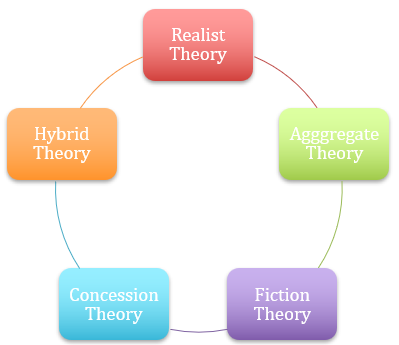
Thus, while conferring personhood upon AI may seem like a viable solution, it necessitates careful deliberation to prevent potential misuse and ensure a balanced legal framework. This analysis endeavors to extend the fundamental theories of corporate legal personality to artificial intelligence. Inspired by the insights of Siina Raskulla, an evaluation is undertaken to explore the feasibility of applying the Hybrid Model of legal personality to AI, assessing its potential to encapsulate the multifaceted nature of AI within a legal framework.
Figure 3 represents the fundamental theories of corporate legal personality to AI
- Realistic theory
The realist theory, pioneered by Maitland in England and developed further by Johannes Althusious and Gierke in Germany, posits that legal personality can be conferred upon non-human entities as a matter of right.[10] This perspective has been endorsed by several eminent legal scholars, including Sir Frederick Pollock, Lasson, Miraglia, and Geldart. According to this theory, legal rights are not exclusive to human beings but may also extend to any entity that exhibits will and independent existence. A corporation, being a juristic person, is considered as “alive” as a human under this framework. A corporation comes into existence through statutory recognition and continues to exist until it is legally dissolved. Proponents of this theory assert that the law does not create entities but merely acknowledges or denies their existence. They argue that organizations and associations possess their own distinct will and consciousness, which guide their decision-making processes.[11] Though their actions are executed through agents or representatives, these individuals merely serve as instruments for the organization’s will rather than defining its identity. Despite its appeal, the realist theory faces criticism for failing to differentiate between artificial and natural persons. It suggests that corporations exist as independent entities regardless of legal recognition, a notion that critics argue is impractical. While humans possess inherent existence, corporations rely entirely on legal statutes for their recognition and operational capacity. [12]
- AI as a Legal Person Under the Realist Theory According to the realist perspective, any entity that exhibits autonomy can be considered “real” and, therefore, eligible for legal personhood. AI, with its ability to function and make decisions independently, fits this criterion. Advanced AI systems demonstrate significantly greater autonomy than corporations, as they do not require human intermediaries such as shareholders or directors to make decisions. Unlike corporations, which rely on human representatives, AI can operate without external intervention, adapting and learning from its experiences and environment. This self-learning capability strengthens the argument that AI can be regarded as a real entity in legal terms potentially even more so than corporations. Detractors of this viewpoint argue that AI remains dependent on training data provided by developers and manufacturers, making it an extension of human input rather than an autonomous being. However, a similar argument can be made about human beings. Just as a person’s thoughts and decisions are influenced by their upbringing, education, and experiences, AI also evolves based on the data it processes and the patterns it recognizes. Moreover, AI has the ability to refine its decision-making over time, often surpassing human capabilities in terms of speed and accuracy. This ability to learn, adapt, and function independently provides strong justification for granting AI legal personhood. While debates surrounding AI’s legal status continue, its ever-growing autonomy and intelligence suggest that it possesses all the necessary attributes to be recognized as a legal entity.
- Aggregate Theory
The aggregate theory of corporate personality was primarily advocated by Adolf Berle and Gardiner Means. According to this perspective, corporations and other legal entities are merely collections of natural persons, whose interactions and relationships are governed by mutual agreements.[13] This theory rejects the notion of a corporation as a distinct legal entity, instead viewing it as nothing more than a structured assembly of individuals collaborating toward a shared goal. Legal scholar Robert Hessen encapsulated this idea by stating that a group or association is merely a conceptual construct a mental framework designed to classify the diverse relationships between individuals. Aggregate theorists argue that a corporation is simply the sum of its constituent members, formed when private individuals with common interests unite to achieve a collective objective. As a result, a company holds no independent existence apart from its owners, and all of its actions are ultimately attributed to the individuals who constitute it. This theory also reinforces the belief that the primary responsibility of a corporation is to serve the interests of its shareholders, rather than acknowledging the corporation as an autonomous entity. Consequently, aggregate theorists reject the concept of corporate personhood, a stance that has drawn criticism from those who support the recognition of corporations as separate legal entities. - AI as a Legal Person Under the Aggregate Theory
AI does not align with the aggregate entity model, primarily due to its high level of autonomy. Unlike corporations, which are driven by human decision-making, AI operates independently, often making decisions without direct human intervention. However, one similarity between AI and corporations under this theory is that both require human representation AI systems, like corporations, do not function in isolation and must be operated, controlled, or overseen by human actors.[14] Despite its seemingly autonomous nature, AI’s decision-making process can always be traced back to human inputs, specifically the data provided by developers and programmers. This aspect becomes particularly crucial when addressing legal liability. Under the aggregate theory, AI is not regarded as an independent legal entity. Instead, accountability falls upon the human stakeholders involved—whether it be the manufacturer, programmer, or user. One way to address AI-related accountability within this framework is through insurance-based systems, which can be used to establish liability and ensure swift compensation in cases where AI causes harm. However, the aggregate theory does not support granting AI separate legal personhood, as it maintains that responsibility should always rest with the human actors connected to the system, rather than the AI itself. - Fiction Theory
The fiction theory of corporate legal personality is believed to have been first articulated by Pope Innocent IV and later supported by esteemed jurists such as Von Savigny, Coke, Blackstone, and Salmond.[15] This theory posits that a corporation is purely an artificial construct, created by legal imagination to facilitate smoother legal and commercial transactions.Under this framework, non-human entities are endowed with legal personality not by nature, but by choice of the legal system. A corporation, in essence, is nothing more than an artificial person, established to represent the collective will and decisions of its members. Since it lacks a physical existence of its own, it operates through agents and representatives who act on its behalf. Consequently, a corporation does not possess an independent identity separate from its members it is their collective actions that grant it a tangible presence in the practical world.
Despite its conceptual clarity, the fiction theory has faced significant criticism, particularly regarding its failure to adequately address the legal liabilities of corporations. A major challenge lies in holding a fictional entity accountable for civil and criminal misconduct, raising concerns about how corporate obligations and penalties should be enforced within this theoretical framework.[16]
- Concession theory
The concession theory of corporate personality was formulated by renowned political scholars Dicey, Savigny, and Salmond, drawing its foundation from the concept of a sovereign state. According to this theory, a corporation exists solely because it has been granted legal recognition by the state. Without this legal acknowledgment, a corporation has no independent existence. The theory asserts that a corporation’s legal personality is not inherent but rather originates from the state’s concession, making its existence entirely dependent on legal authorization. A major criticism of the concession theory is its excessive emphasis on the discretionary power of the state, as it suggests that corporate entities exist only by virtue of state approval. This viewpoint raises concerns about the extent to which the state should control the recognition and functioning of corporate entities.[17] - AI Personhood Under the Fictional and Concessional Theory
Under the fictional and concessional theory, neither corporations nor artificial intelligence systems possess intrinsic value as natural entities. Consequently, they have no inherent claim to legal personhood.[18] However, the state may grant legal capacities to artificial entities, including corporations, when they fulfill a significant societal role and contribute economic or social value. Just as a corporation’s objectives are explicitly stated in its Memorandum of Association, AI can also be assigned a “Main Object”, defining the purpose for which it was designed. In corporate law, any action undertaken beyond a company’s stated objective is considered ultra vires (beyond its legal powers), rendering such activities unauthorized. Similarly, if an AI system operates beyond its intended function, it could be classified as ultra vires, absolving human creators of liability for its unintended actions. The state plays a pivotal role in recognizing AI’s purpose based on its technical attributes, as defined by human developers. The primary responsibility of the state is to ensure that AI systems, if granted legal personhood, contribute positively to society while mitigating risks associated with their operation. However, effective risk management necessitates assigning certain liabilities to the human actors involved in AI’s creation and deployment. Thus, while AI may be considered a legal person under specific conditions, its recognition must be accompanied by well-defined regulatory mechanisms to balance innovation with accountability. - Hybrid Theory
Each legal model presents distinct perspectives on personhood, often with conflicting interpretations. The simultaneous application of these models results in a hybrid theory of corporate legal personhood, which acknowledges that a legal entity may, at different times or in varying contexts, embody characteristics from multiple theoretical frameworks.[19] A legal person can possess traits of a real entity, an aggregate entity, as well as an artificial, fictional, or concessional entity, depending on the circumstances. - AI and Legal Personhood Under the Hybrid Model
Given the intricate and multifaceted nature of artificial intelligence, no single legal model can comprehensively capture its essence. Instead, a hybrid model offers a more holistic approach when contemplating AI’s potential legal personhood. It accommodates the paradoxical nature of corporate entities, which can simultaneously exist as “persons” and “non-persons,” or function as both “subjects of ownership” and “objects of ownership.” When applied to AI, the hybrid model provides a more fitting framework for legal recognition than any single theory alone. In many respects, AI exhibits a greater potential for legal personhood than corporations, as it operates with a higher degree of independence, autonomy, realism, and complexity. However, this very autonomy poses a challenge highly advanced AI systems, particularly those capable of self-learning and adapting to dynamic environments, may be too autonomous for legal personhood. Their ability to evolve unpredictably raises concerns about liability, control, and accountability. While the hybrid model does not offer definitive answers regarding AI’s eligibility for legal personhood, it serves as a valuable analytical tool. By considering key factors such as the varying levels of autonomy across different AI systems, the hybrid model allows for a nuanced understanding of AI’s diverse attributes and the potential legal powers that could be ascribed to it.
Justifications for Granting Legal Personhood to AI
As artificial intelligence continues to evolve and integrate seamlessly into daily human life, the question of granting AI legal personhood gains increasing significance.[20] According to Simon Chesterman, two primary arguments support this notion. Firstly, the issue of accountability arises when AI systems make decisions that lead to adverse consequences, there must be a designated entity to bear responsibility, addressing what is commonly referred to as the “accountability gap.” Secondly, if AI is capable of independent innovation, legal recognition would allow it to receive due credit and rewards, much like human inventors. With rapid advancements, AI is approaching human-level intelligence, and it is anticipated that Artificial General Intelligence (AGI) may eventually surpass human cognitive abilities. Given these developments, a compelling parallel can be drawn between AI and other juridical persons recognized by law. According to artificial personhood theories in jurisprudence, AI could, in principle, be accorded legal status. However, the crucial question is not whether AI can be granted personhood, but rather whether it should be. The focus must be on evaluating the implications of such a decision within the legal framework assessing its advantages, ethical ramifications, and practical consequences.[21]
Conclusion
Determining whether an artificially intelligent machine should be granted personhood is far from a straightforward question. To reach a meaningful conclusion, a fundamental inquiry must be addressed: Should entities composed of software, hardware, and algorithms be bestowed with legal rights and obligations? The answer hinges on a multitude of factors, including economic, cultural, legal, and political considerations. As AI systems advance in autonomy, making it increasingly difficult to draw clear connections between their inputs (commands) and subsequent behaviors, parallels with human cognition become more pronounced. This, in turn, complicates any normative approach whether in ethical discourse or legal frameworks particularly when assigning liability for damages caused by autonomous AI entities. Legal personhood inherently entails a framework of rights and duties; however, these are not necessarily uniform for all persons. Historically, women, certain ethnic minorities, individuals of specific castes, and disadvantaged communities were denied equal rights despite being classified as persons. Legal personhood can, in some cases, be granted solely for rights without imposing obligations.
A striking example of this is found in Ecuador’s constitution, where the entire ecosystem has been recognized as a legal person not to bear obligations, but to ensure that human representatives can advocate on its behalf. However, extending such a model of personhood to AI would serve little practical purpose. Alternatively, AI could be designated as a legal person with obligations but without rights. While this might initially seem like a compelling approach, significant practical challenges arise. For instance, under civil law, liability often entails financial compensation, yet an AI entity typically lacks assets to fulfill such obligations. If we draw a comparison to corporations, the legal framework in the United States grants extensive rights to corporations, yet it withholds certain privileges, such as protection against self-incrimination. Typically, artificial legal entities are afforded fewer rights than natural persons. This principle also extends to international law, where sovereign states enjoy full legal personalities, while international organizations possess only limited legal recognition based on their functions and mandates. A similar paradigm could be applied to AI granting it restricted rights and obligations primarily to address concerns related to accountability and recognition, while ensuring that it does not receive constitutional, human, or labor rights.
[1] [1896] UKHL 1, [1897] AC 22.
[2] ‘Open Letter To The European Commission, Artificial Intelligence and Robotics’,https://www.politico.eu/wp-content/uploads/2018/04/RoboticsOpenLetter.pdf, retrieved on 4th March 2025 at 03:55 p.m.
[3] Timothy Bencroft, ‘India: Dolphins declared non- human persons’ (5 August 2018)Pravda.ru. https://english.pravda.ru/science/125310-dolphins_india/, retrieved on, 13th Feb,2025, 03:39pm
[4] Monica Chin, ‘ExamSoft’s Proctoring software Has A Face Detecting Problem’ The Verge, 6th
January 2021, WIRED, https://www.theverge.com/2021/1/5/22215727/examsoft-online-exams- testing-facial-recognition-report, retrieved on 25th Feb 2025 at 03:46 p.m.
[5] Sandhya Ramesh, ‘Pacific islands leaders grant whales & dolphins ‘personhood’ status. India did it over a decade ago’, THE PRINT,11april, 2024, https://theprint.in/science/pacific-islands-leaders- grant-whales-dolphins-personhood-status-india-did-it-over-a-decade-ago/2036312/,retrieved on 24th Feb, 2025 at 03;55 p.m.
[6] Dutch Childcare Benefit Scandal An Urgent Wake-Up Call To Ban Racist Algorithms’, Amnesty International, retrieved on 4th April,2024 at 03:35 p.m.
[7] Maia Szalavitz, ‘The Pain Was Unbearable. Then Why Did Doctors Turn Her Away?’, Wired, 11thAugust, 2021,https://www.wired.com/story/opioid-drug-addiction-algorithm-chronic-pain/ Retrieved on 3rd March, 2025 at 05:02 p.m.
[8] Emmanuel Martinez & Lauren Kirchner, ‘The Secret Bias Hidden in Mortgage-Approval Algorithms’ The MarkUp, 25th August, 2021, https://themarkup.org/denied/2021/08/25/the-secret-bias-hidden-in- mortgage-approval-algorithms retrieved on 13th Feb, 2025, 05:04pm
[9] Siina Raskulla, ‘Hybrid theory of corporate legal personhood and its application to artificial intelligence’, SN Soc Sci 3, 78 (2023). https://doi.org/10.1007/s43545-023-00667-x.
[10] Robert Hessen, In Defense of the Corporation (Hoover Institution Press 1978) 41, https://ajol-file- journals_479_articles_183755_submission_proof_183755-5653-467747-1-10-20190220%20(1).pdf.
[11] Alan Dignam and John Lowry, Company Law (8th edn., OUP 2014) 405
[12] Ibid.
[13] Kurki VA (2019) A theory of legal personhood. Oxford University Press, Oxford, https://link.springer.com/article/10.1007/s43545-023-00667-x, retrieved on 8th March 2025 at 02:58
[14] SA Trainor, ‘A Comparative Analysis of a Corporation’s Right Against Self-Incrimination’ (1994) 18 FordhamIntlLJ 2139.
[15] Simon Chesterman, ‘Artificial Intelligence and the Limits of Legal Personality’, Brtish Institute of international and Comparative Law,Cambrdge University Press, http://creativecommons.org/licenses/by/4.0.
[16] Ryan Calo,Robotics and the Lessons of Cyberlaw,103, CALIF.L. REV. 513,547,547-49(2015) , https://digitalcommons.law.uw.edu/faculty-articles/23/ retrieved on 14th Feb, 2025 at 03:15 a.m.
[17] J Turner, bot Rules: Regulating Artificial Intelligence (Palgrave Macmillan 2019) 193.
[18] Daniel Kahneman & Edward Diener, Well- Being : Foundations of Hedonic Pyschology302-29(2003) https://philpapers.org/rec/KAHWTF, retrieved on 14th Feb 2025, 03:24 a.m.
[19] Immanuel Kant, ‘The Metaphysics of Moral’,( Mary Gregor ed., Cambridge University Press, 1991((1797)
[20] Alan Dignam and John Lowry, Company Law (8th edn., OUP 2014) 405
[21] Simon Chesterman, ‘Artificial Intelligence and the Limits of Legal Personality’, Brtish Institute of international and Comparative Law,Cambrdge University Press, http://creativecommons.org/licenses/by/4.0
[1] 124 A.D.3d 148 (N.Y. App. Div. 2014),
[2] Spencer Lo, ‘What Is a Legal Person? Law Dictionary Corrects Decades Old Error’, https://www.nonhumanrights.org/blog/legal-person-blacks-law- retrieved on 3rd Feb, 2025, 04:40 pm
[1] V.D. Mahajan, ‘Jurisprudence & Legal Theory’, 2021 edition, EBC, pg 336.
[1] Ganges and Yamuna rivers granted same legal rights as human beings’, Th e Gurdian,21st March, 2017, https://www.theguardian.com/world/2017/mar/21/ganges-and-yamuna-rivers-granted-same- legal-rights-as- retrieved on 27th Feb,2025 at 03:24 p.m.
[1] Arnoand , B.B. and Gough, D., ‘Turing’s People, Personhood, Artificial Intelligence and Popular Culture’ (2017),, Canberra Law review, 15(1) ,p,1-37,
[2] Christopher Stone, ‘Should Trees Have Standing? Toward Legal Rights for natural Objects. 45 S. Cal. L. Rev.48-49.
[3]John Chipman Gray, ‘The Nature and Sources of the Law’ (Roland Gray ed., McMilan 1921) (1909)
[1] Washington Post, 11th June, 2022, retrieved on 3rd Feb, 2025, at 04:03 p.m
[2] Nitasha Tiku, ‘The Google Engineer Who Thinks The Company’s AI Has Come To Life’, The Washington, retrieved on 3rd March, 2025, at 04:03 p.m.
[1] Emily Willingham, “AI’s Victory In Go Inspire Better Human Game Playing” Scientific American, 13thMarch 2023, https://www.scientificamerican.com/article/ais-victories-in-go-inspire-better-human- retrieved on 26th feb 2025 at 02:56 p.m.
[2] Colin Lecher, “How Amazon Automatically Tracks And Fires Warehouse Workers For ‘Productivity”, (2019), retrieved on 27th feb, 2025, 6:00 pm
[3] Christof Heyns, ‘Report Of The Special Rapporteur On Extrajudicial, Summary Or Arbitrary Executions, UNGA,A/HRC/23/47’.,
https://digitallibrary.un.org/record/755741?ln=en&v=pdf, retrieved on 10th feb 2025 at 08:20 pm.
[4] Robot That Can Breathe And Sweat Helps Scientists understand Impact of Soaring Heat’,NDTV World, 4th march 2025.
[1] Research Scholar School of Legal Studies at Vivek University Bijnor Uttar pradesh Orcid id :0009-0008-6470-2358, Saumyaapandey2001@gmail.com
[2] Advocate Allahabad High Court Email- hs8381@gmail.com Orcid id –https://orcid.org/0009-0003-8009-8086,
[3] Assistant Professor Manuu Law School at Maulana Azad National Urdu University(A Central University Grade A+) Hyderabad (Telangana) -500032 Email- sudhanshu.nlu@gmail.com
Orcid id – https://orcid.org/0009-0006-6694-1032