Archana Jadon
Research Scholar, Jiwaji University Gwalior
&
Dr. Ganesh Dubey
Dean , Institute of Law, Jiwaji University Gwalior
Abstract
The brutal gang rape and murder of a 23-year-old paramedical student in New Delhi on the night of December 16, 2012, commonly known as the ‘Nirbhaya case,’ triggered an unprecedented wave of public outrage in India and catalysed a sweeping overhaul of the country’s sexual offence laws. The Government constituted the Justice J.S. Verma Committee within a week, which submitted a landmark report in January 2013 recommending far-reaching reforms. The Criminal Law (Amendment) Act, 2013 — popularly called the Anti-Rape Act or the Nirbhaya Act — was subsequently enacted, amending the Indian Penal Code, the Code of Criminal Procedure, and the Indian Evidence Act. This paper critically examines the substantive and procedural reforms introduced by the 2013 Amendment and subsequent legislative measures, including the Criminal Law Amendment Act, 2018, the Juvenile Justice (Care and Protection of Children) Act, 2015, and the Bharatiya Nyaya Sanhita, 2023. It evaluates the divergence between the recommendations of the Verma Committee and what was actually enacted, appraises the practical effectiveness of the reforms through crime statistics and empirical data, and identifies persistent structural lacunae — notably the non-criminalisation of marital rape, the absence of gender-neutral rape laws, inadequate implementation of fast-track courts, and deep-rooted socio-cultural barriers. The paper concludes that while the 2013 reforms were a necessary and significant step forward, they remain symbolically potent but functionally limited without comprehensive systemic reform.
Keywords: Nirbhaya Case, Criminal Law Amendment Act 2013, Justice Verma Committee, Rape Law Reform, Sexual Violence, Marital Rape, Fast-Track Courts, India
1. Introduction
On the night of December 16, 2012, a 23-year-old woman — a paramedical student subsequently referred to by the pseudonym ‘Nirbhaya’ — boarded a private bus in South Delhi along with a male friend. Six men on board, including the driver, brutally assaulted her male companion, gang-raped her, inserted a metal rod into her body, and threw both victims out of the moving bus onto the road. She succumbed to her injuries thirteen days later at a hospital in Singapore on December 29, 2012, following multiple organ failure, internal bleeding, and cardiac arrest.
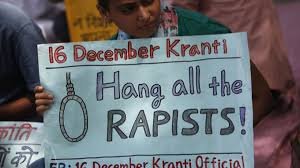
The incident unleashed nationwide protests of a magnitude unprecedented in post-Independence India. Thousands gathered at India Gate and Jantar Mantar in freezing temperatures, demanding justice, accountability, and structural reform to India’s inadequate laws governing sexual violence. The protests transcended class, gender, and geography, signalling a profound rupture in public consciousness regarding crimes against women. The United Nations Entity for Gender Equality and the Empowerment of Women (UN Women) also called upon the Government of India to undertake radical reforms to protect women.
The legal response was swift. Within a week, the Government constituted a three-member Committee chaired by Justice J.S. Verma, former Chief Justice of the Supreme Court, alongside Justice Leila Seth, a former Judge of the Delhi High Court, and Gopal Subramaniam, former Solicitor General of India. The Committee submitted its 631-page report on January 23, 2013, within 30 days of its constitution. On February 3, 2013, the President promulgated an Ordinance, which was subsequently enacted as the Criminal Law (Amendment) Act, 2013.
This paper undertakes a comprehensive and critical appraisal of the rape law reforms that followed the 2012 Delhi gang rape case. It analyses the adequacy of the Justice Verma Committee’s recommendations, evaluates the legislation that was ultimately enacted, examines the practical impact of the reforms on crimes against women, and identifies the significant gaps that remain unaddressed more than a decade later. It also considers subsequent reforms, including the Bharatiya Nyaya Sanhita, 2023, which replaced the Indian Penal Code.
2. Legal Landscape Before 2013: Structural Deficiencies
2.1 The Pre-Amendment Definition of Rape
Prior to the 2013 Amendment, the definition of rape under Section 375 of the Indian Penal Code, 1860 (IPC) was narrow and outdated. It defined rape exclusively as penile-vaginal penetration and was framed in gendered terms that offered protection only to cisgender women as victims and criminalised only men as perpetrators. The definition excluded oral rape, digital rape, and penetration by objects — acts that constituted the most egregious violations in many notorious cases, including the Nirbhaya case itself.
The minimum sentence for rape was seven years’ rigorous imprisonment, extendable to life. However, the absence of specific provisions for aggravated forms of rape — gang rape, custodial rape, rape by persons in positions of authority — meant that the law failed to adequately reflect the varying gravity of different circumstances of sexual assault. Section 376 provided some aggravated categories, but the framework was fragmented and inadequate.
2.2 Problematic Evidentiary Standards
The Indian Evidence Act, 1872 contained a provision (Section 155(4)) that permitted the defence to adduce evidence of the prosecutrix’s general immoral character. This meant that a rape survivor’s sexual history and character could be scrutinised and weaponised against her in trial. This ‘two-finger test’ or ‘virginity test’ — medically unsound and deeply humiliating — continued to be used by doctors in forensic examinations, further traumatising victims and producing evidence that courts sometimes admitted to cast doubt on the victim’s testimony.
The ‘two-finger test’ lacked any probative value but served as a powerful tool of re-victimisation, deterring women from reporting rapes. Its persistence reflected a systemic bias that treated the victim’s sexual history as material to whether rape had occurred — a position inconsistent with modern understandings of consent.
2.3 Procedural and Systemic Failures
Beyond substantive law, procedural and institutional failures compounded injustice for rape survivors. Police often refused to register First Information Reports (FIRs), especially where the perpetrator was known to the victim or was a person of influence. Protracted trials — routinely spanning years or decades — meant that conviction, where it came, was frequently delayed beyond the point of meaningful justice. Witness intimidation and hostile cross-examination of survivors further eroded the prospect of just outcomes.
3. The Justice Verma Committee Report, 2013
3.1 Mandate and Methodology
The Justice Verma Committee was constituted on December 23, 2012 with the objective of recommending amendments to criminal law that would provide for quicker trials and enhanced punishment for sexual offences. The Committee received over 80,000 submissions from the public, NGOs, women’s rights organizations, legal professionals, jurists, and academics. It completed its report in a remarkable 29 days, demonstrating that meaningful legal reform can be carried out with urgency and rigour.
3.2 Key Recommendations
The Committee’s recommendations were wide-ranging and reflected a progressive, rights-based approach to sexual violence:
- Redefinition of rape: The Committee recommended that rape be redefined beyond penile-vaginal penetration to encompass any non-consensual penetration of a sexual nature, including oral and anal penetration and penetration by objects. Rape was characterised as an expression of power rather than passion.
- Consent: The Committee recommended that consent be defined as unequivocal voluntary agreement and that the absence of physical resistance must not imply consent.
- Criminalisation of marital rape: Crucially, the Committee recommended the removal of the marital rape exception, arguing that marriage should not constitute irrevocable consent to sexual acts and that the exception was founded on the archaic notion of wives as the property of their husbands.
- Rejection of the death penalty: The Committee recommended life imprisonment for rape and murder but explicitly rejected the death penalty, opining that it fails to have a deterrent effect and could perversely lead to an increase in the killing of rape victims to eliminate witnesses.
- Expanding sexual offences: Criminalisation of acid attacks, stalking, voyeurism, sexual harassment in the workplace, and attempt to disrobe were recommended as standalone offences.
- Gender-neutral provisions: The Committee recommended expanding the scope of criminal law to include sexual assault on men and recognising homosexual and transgender persons as potential victims.
- Armed Forces Special Powers Act (AFSPA): The Committee recommended that AFSPA be amended to remove the requirement of prior sanction for prosecution of armed forces personnel accused of sexual offences against women.
- Electoral reforms: The Committee recommended disqualifying persons charged with sexual offences from contesting elections.
- Police accountability: Recommendations included the establishment of Rape Crisis Cells, mandatory CCTV installations in police stations, and command responsibility for senior officers over the conduct of subordinates.
- The Verma Committee Report was lauded by legal scholars, feminist organisations, and international human rights bodies as a transformative document. Its emphasis on systemic accountability, institutional reform, and a rights-based framework for consent went far beyond the punitive demands that dominated public discourse at the time.
4. The Criminal Law (Amendment) Act, 2013: Provisions and Analysis
4.1 Enactment
The Criminal Law (Amendment) Act, 2013, passed by the Lok Sabha on March 19, 2013 and by the Rajya Sabha on March 21, 2013, received Presidential assent on April 2, 2013 and was deemed to have come into force from February 3, 2013. It amended four statutes: the Indian Penal Code 1860 (IPC), the Code of Criminal Procedure 1973 (CrPC), the Indian Evidence Act 1872, and the Protection of Children from Sexual Offences Act, 2012.
4.2 Substantive Amendments to the IPC
4.2.1 Expanded Definition of Rape (Section 375)
The definition of rape in Section 375 IPC was substantially broadened. Rape now includes not only penile-vaginal penetration but also penetration of the vagina, urethra, or anus by any object, manipulation of any part of the body to cause penetration of the vagina, urethra, or anus of another person, and applying the mouth to the genitals, anus, or urethra of another person. The law continues to apply only against men as perpetrators and women as victims.
The new definition of consent clarifies that consent means an unequivocal voluntary agreement by a woman through words, gestures, or any form of verbal or non-verbal communication, and that the absence of physical resistance shall not be regarded as consent.
4.2.2 Enhanced Punishments
The minimum sentence for rape was raised from seven years to ten years, extendable to life imprisonment. Under Section 376A IPC, rape causing death or leaving the victim in a persistent vegetative state is punishable with rigorous imprisonment of not less than twenty years, extendable to life imprisonment or death. This was the first time the death penalty was introduced for rape in India — in direct contravention of the Verma Committee’s recommendation. Gang rape under Section 376D became punishable with a minimum sentence of twenty years, extendable to life imprisonment. Repeat offenders under Section 376E became liable to life imprisonment or death.
4.2.3 New Sexual Offences
Several new offences were inserted into the IPC:
- Section 326A (Acid Attack): Voluntarily causing grievous hurt by throwing acid is punishable with imprisonment of not less than ten years, extendable to life, and a fine sufficient to meet medical expenses of the victim.
- Section 326B (Attempt to Throw Acid): Punishable with imprisonment of five to seven years and a fine.
- Section 354A (Sexual Harassment): Encompasses a range of acts from unwelcome physical contact to demand for sexual favours. Punishable with imprisonment of up to three years.
- Section 354B (Assault with Intent to Disrobe): Punishable with imprisonment of three to seven years.
- Section 354C (Voyeurism): Punishable with imprisonment of one to three years for first offence, three to seven years on subsequent conviction.
- Section 354D (Stalking): Following a woman and contacting her despite disinterest; punishable with imprisonment up to three years for first offence, five years on subsequent conviction.
4.3 Amendments to the Evidence Act
Section 155(4) of the Indian Evidence Act, which permitted the character of the prosecutrix to be brought into evidence, was repealed. The proviso to Section 146 was strengthened to prohibit cross-examination of a rape victim with reference to her sexual history or general moral character. These amendments addressed one of the most pernicious systemic features of rape trials.
4.4 Procedural Amendments
Statements of rape victims were to be recorded by female police officers. Medical examination of rape victims was to be conducted only with the consent of the victim. The ‘two-finger test’ was not explicitly banned but the evidentiary basis for it was substantially eroded. Fast-track courts for rape cases were envisioned, though their implementation was left to state governments. Time limits were introduced for completion of trials: 60 days from the date of filing the charge-sheet.
4.5 What Was Left Out
Several critical recommendations of the Justice Verma Committee were not incorporated:
- Marital rape: The marital rape exception in Section 375 (Exception 2) was retained with a modification only raising the age of the wife from fifteen to eighteen years. This was a significant failure.
- AFSPA: No amendment was made to allow prosecution of armed forces personnel without prior sanction for sexual offences.
- Electoral disqualification: The recommendation to disqualify candidates charged with sexual offences was not implemented.
- Gender neutrality: Rape law remained gendered, excluding male, transgender, and non-binary victims and female perpetrators.
- Command responsibility: Senior officers were not held vicariously liable for the conduct of subordinates.
5. Subsequent Legislative Developments
5.1 The Juvenile Justice (Care and Protection of Children) Act, 2015
One of the accused in the Nirbhaya case was a juvenile — widely reported to have been the most brutal of the six perpetrators. Under the existing Juvenile Justice Act, he was tried as a juvenile and sentenced to only three years in a reform facility, being released in December 2015. The public outrage over this outcome contributed significantly to the enactment of the Juvenile Justice (Care and Protection of Children) Act, 2015, which provided for the trial of juveniles aged sixteen to eighteen years as adults if they are accused of heinous offences, subject to a preliminary assessment by the Juvenile Justice Board.
5.2 The Criminal Law Amendment Act, 2018
In the wake of the Kathua gang rape case involving an eight-year-old child and the Unnao rape case involving a minor, the Criminal Law (Amendment) Act, 2018 was enacted. Its key provisions included the death penalty for rape of a child below twelve years of age under Section 376AB IPC; gang rape of a girl below sixteen years became punishable with twenty years to life imprisonment; and mandatory completion of investigation of rape cases within two months of filing an FIR. The 2018 amendment also restricted the granting of anticipatory bail in cases of rape of minors.
5.3 The Bharatiya Nyaya Sanhita, 2023
The Bharatiya Nyaya Sanhita (BNS), 2023, which came into force on July 1, 2024 replacing the IPC, retains the core provisions on sexual offences in substantially the same form. Under Section 63 of the BNS, the definition of rape corresponds largely to the amended Section 375 IPC. Section 64 and onwards provide for punishments mirroring those in the post-2013 IPC. The BNS raises the age under which consensual sex is classified as rape, in the case of gang rape, from sixteen to eighteen years.
Notably, however, the BNS retains the marital rape exception — now under Exception 2 to Section 63 — only marginally modified to raise the wife’s age from fifteen to eighteen years. The government, in introducing the BNS, missed another opportunity to criminalise marital rape, notwithstanding sustained advocacy from women’s rights groups and several High Courts.
6. Critical Appraisal: Achievements and Shortcomings
6.1 Achievements
6.1.1 Expanded Legal Recognition of Sexual Violence
The 2013 Amendment significantly broadened the legal framework. By expanding the definition of rape to include non-penetrative and non-penile forms of penetration, the law acknowledged the full spectrum of sexual violence and brought within its ambit acts that were previously punishable only as lesser offences. The codification of new offences — stalking, voyeurism, acid attacks, sexual harassment — filled critical gaps and sent a legislative signal that gender-based violence in all its forms would be treated with seriousness.
1.2 Strengthened Consent Framework
The statutory definition of consent as an unequivocal voluntary agreement, and the clarification that absence of resistance does not constitute consent, was a significant normative achievement. It aligned Indian law with international standards and provided clearer guidance to courts, prosecutors, and law enforcement on the centrality of consent in sexual offence prosecutions.
6.1.3 Evidentiary Reform
The repeal of Section 155(4) of the Evidence Act and the restriction on questioning rape victims about their sexual history removed a particularly harmful evidentiary tool from the arsenal of defence lawyers. This reform, though unevenly implemented in practice, represented a principled rejection of the ‘character assassination’ approach to rape trials
6.1.4 Institutional Impetus
The reforms catalysed the establishment of fast-track courts, One-Stop Centres for survivors of sexual violence, and heightened public awareness. Procedural safeguards — including recording of victim statements by female officers and restrictions on two-finger tests — sought to make the criminal justice system less hostile to survivors.
6.2 Shortcomings and Critiques
6.2.1 Retention of the Marital Rape Exception
The most glaring failure of the 2013 reform — and indeed of all subsequent legislation including the BNS 2023 — is the continued retention of the marital rape exception. The Justice Verma Committee categorically recommended its removal, recognising that marriage cannot constitute an irrevocable and perpetual consent to sexual intercourse. The Parliamentary Standing Committee that examined the bill rejected criminalisation on the ground that it would lead to ‘destabilisation of the institution of marriage.’ The government’s position has remained that the Protection of Women from Domestic Violence Act, 2005 provides sufficient civil remedies.
This position is constitutionally questionable. In Independent Thought v. Union of India (2017), the Supreme Court read down the marital rape exception to the extent that it applied to girls between fifteen and eighteen years of age, holding that it violated Articles 14, 15, and 21 of the Constitution. The court stopped short of addressing the exception for adult wives. The Delhi High Court, in RIT Foundation v. Union of India (2022), delivered a split verdict on marital rape, with one judge finding the exception unconstitutional and another upholding it. The matter is pending before the Supreme Court. The BNS, passed after this split verdict, retained the exception — a decision roundly criticised by legal scholars and women’s rights advocates.
6.2.2 Death Penalty: Symbolic Rather Than Deterrent
The introduction of the death penalty for rape resulting in death or repeat rape was adopted against the explicit recommendation of the Verma Committee, which had opined that the death penalty does not deter crime. Academic scholarship and empirical evidence from criminology and penology consistently suggest that the severity of punishment has a far weaker deterrent effect than the certainty and swiftness of punishment. The introduction of the death penalty in rape law has also been criticised on the ground that it may incentivise rapists to murder their victims to eliminate witnesses — a perverse unintended consequence.
Moreover, death penalty jurisprudence in India under Bachan Singh v. State of Punjab (1980) requires that death be reserved for the ‘rarest of the rare’ cases, creating an uncertain and high threshold that may paradoxically result in lower conviction rates if courts are reluctant to impose such extreme punishment.
6.2.3 Persistent Low Conviction Rates
Despite the enhanced legal framework, conviction rates in rape cases have remained stubbornly low. NCRB data indicates that between 2014 and 2022, the conviction rate in rape cases never exceeded 16 percent when measured against all cases under trial (including backlog). Even using the narrower metric of cases disposed in a given year, conviction rates ranged between 27.2% (in 2018) and 32.2% (in 2017). A BMC Public Health study found that by the end of 2018, only 9.6% of rape cases had completed trial, with acquittals in 73% of those completed.
The charge-sheeting rate for rape cases, which stood at 95.4% in 2013, declined to 86.6% by 2017, suggesting that despite legislative reforms, the police were increasingly failing to build prosecutable cases. As of 2022, more than 88% of rape cases that had reached courts were pending trial, reflecting a backlog crisis that renders the procedural reforms largely ineffective in practice.
6.2.4 Rising Crime Statistics: Deterrence Failure or Better Reporting?
Reported rape cases rose sharply after 2013 — from approximately 24,923 cases in 2012 to 33,707 in 2013, peaking at 38,947 in 2016. This increase is partly attributable to the Nirbhaya movement’s encouragement of reporting, the broadened definition of rape, and heightened public awareness. However, NCRB data for 2022 records 4,45,256 crimes against women overall, with rape constituting 7.1% of this figure. Research published in BMC Public Health found that the rate of rape-related crime increased from 11.6 per 100,000 women in 2001 to 19.8 per 100,000 in 2018, with the most significant increase occurring after 2012. The Commonwealth Human Rights Initiative concluded that the 2013 amendments had ‘not been very effective in curbing the crimes of rape.’
6.2.5 Absence of Gender Neutrality
The Verma Committee recommended that the law be made gender-neutral to include male, transgender, and non-binary victims of sexual assault. The 2013 Amendment, despite all its reforms, retained the gendered framing of rape law — only men can perpetrate rape and only women can be victims. While the CrPC and other provisions offer some protection to men and transgender persons, the central offence of rape under Section 375 IPC (now Section 63 BNS) remains gendered. This lacuna is particularly significant given the Supreme Court’s recognition of the rights of the transgender community in National Legal Services Authority v. Union of India (2014).
6.2.6 AFSPA and Military Impunity
The Verma Committee’s recommendation that the Armed Forces Special Powers Act be amended to remove the requirement of prior sanction for prosecuting armed forces personnel for sexual offences was rejected. The result is a zone of de facto impunity in conflict-affected regions such as Manipur, Kashmir, and the Northeast, where sexual violence by security forces has been documented by human rights organisations. The Manorama Devi case (Manipur, 2004) and the Shopian rape case (Kashmir, 2009) exemplify the limitations imposed by AFSPA on rape prosecutions. This rejection of the Committee’s recommendation represents a significant failure of political will to bring all state actors within the ambit of anti-rape law.
6.2.7 Fast-Track Courts: Implementation Deficit
While the concept of fast-track courts for rape cases was positively endorsed, implementation has been deeply uneven. States have been slow to establish dedicated courts; those that exist suffer from inadequate infrastructure, insufficient judges, and institutional inertia. NCRB data consistently shows that over 88% of rape cases reaching trial courts remain pending, undermining the legislative objective of speedy justice.
6.2.8 Socio-Cultural Barriers
Perhaps most fundamentally, legal reforms operate within a socio-cultural environment characterised by patriarchal norms, the stigmatisation of rape survivors, and systemic gender bias in law enforcement and the judiciary. Studies on police responsiveness have documented persistent resistance to registering FIRs, victim-blaming in initial responses, and inadequate training for investigating sexual offences. The National Family Health Survey has documented that a significant proportion of women who have experienced sexual violence have reported it to no authority. Deep-rooted social attitudes — identified by academic commentators like Professor Bibha Tripathi of BHU as creating a legislative response driven by ‘collective conscience’ rather than systematic reform — constrain the effectiveness of even well-designed legal provisions.
7. Comparative Perspectives
India’s post-2012 reforms may be usefully situated within the global context of rape law reform. The United Kingdom’s Sexual Offences Act, 2003 provides a comprehensive gender-neutral framework with detailed consent provisions, including a ‘conclusive presumptions’ test and a ‘evidential presumptions’ test that shifts the burden of proof regarding consent. Canada’s Criminal Code provides for a rape shield provision and a clear capacity-based consent model. South Africa’s Sexual Offences and Related Matters Amendment Act, 2007 provides for gender-neutral rape offences with an expansive definition.
A common thread in international best practice is the emphasis on consent, gender neutrality, and procedural protection for survivors — principles that the Verma Committee had recommended but which Indian law continues to implement only partially. The non-criminalisation of marital rape, in particular, places India at variance with the majority of democratic jurisdictions that have abolished the marital rape exception.
8. The Way Forward: Recommendations
Based on the foregoing analysis, this paper recommends the following measures to strengthen the legal and institutional framework for addressing rape and sexual violence in India:
Criminalise marital rape: The marital rape exception must be removed in conformity with the Verma Committee’s recommendation, international human rights standards, and the constitutional guarantees of Articles 14, 15, 19, and 21. The Supreme Court should be called upon to resolve the constitutional question expeditiously.
- Gender-neutral rape law: The definition of rape and related sexual offences should be made gender-neutral to include all persons, regardless of gender identity, as potential victims and perpetrators.
- Revise the death penalty approach: The death penalty for rape should be abolished or narrowed substantially, consistent with the Verma Committee’s reasoning. The focus of penal policy should shift toward certainty of conviction and proportionality of punishment.
- Mandatory fast-track courts: The Central Government should enact binding legislation mandating the establishment and proper resourcing of exclusive fast-track courts for sexual offence cases in every district, with clear timelines enforced through judicial oversight.
- Reform the AFSPA: The requirement of prior sanction for prosecution of armed forces personnel accused of rape should be abolished. Every accused person must face equal accountability under criminal law.
- Police sensitisation and accountability: Comprehensive training programmes for police officers on gender sensitivity, victim-centred investigation, and the legal standards for consent should be mandatory. Failure to register FIRs in rape cases should carry personal disciplinary and legal consequences.
- Abolition of the two-finger test: A statutory prohibition on the ‘two-finger test’ or any similar form of medical examination that violates the dignity of the victim should be enacted, reinforced by regular judicial oversight.
- Electoral reform: The Verma Committee’s recommendation to disqualify candidates charged with sexual offences from contesting elections should be implemented through legislation.
- Survivor support infrastructure: One-Stop Centres, Rape Crisis Cells, and legal aid for survivors should be made universal and adequately funded, with particular attention to rural and conflict-affected areas.
- Research and data: Comprehensive and regularly updated disaggregated data on rape reporting, investigation outcomes, trial timelines, conviction rates, and survivor demographics should be published by NCRB, to enable evidence-based policy-making.
9. Conclusion
The 2012 Delhi gang rape case was a watershed moment in India’s legal and social history. It compelled the State to confront the deep inadequacy of its laws governing sexual violence and to undertake the most comprehensive overhaul of rape law since Independence. The Criminal Law (Amendment) Act, 2013, and the broader legislative response that followed, represent genuine achievements: an expanded definition of rape, a robust consent framework, the codification of new sexual offences, and important evidentiary reforms.
Yet a candid assessment must acknowledge that these reforms have fallen significantly short of their promise. The recommendations of the Justice Verma Committee — arguably the most sophisticated and progressive blueprint for rape law reform that India has produced — were selectively adopted, with the most transformative proposals rejected on grounds of political convenience or social conservatism. Marital rape remains un-criminalised. Rape law remains gendered. Military impunity under AFSPA persists. Conviction rates remain alarmingly low. The backlog of pending cases has grown.
The law, as Justice J.S. Verma himself recognised before his death, operates within a broader crisis of governance and democracy. Legislative reform, however well-designed, cannot substitute for cultural change, institutional accountability, and political will. The Nirbhaya case must be remembered not only as the catalyst for the amendments of 2013 but as a continuing call to arms for a society that remains far from providing the equality, safety, and dignity that its women are constitutionally entitled to. In the words of the Delhi High Court, Nirbhaya’s case laid bare the ‘enormity of the failure of the criminal justice system.’ More than a decade on, fulfilling the promise of genuine reform remains an urgent, unfinished task.
References
Primary Sources: Legislation
1. Indian Penal Code, 1860 (Act No. 45 of 1860).
2. Code of Criminal Procedure, 1973 (Act No. 2 of 1974).
3. Indian Evidence Act, 1872 (Act No. 1 of 1872).
4. Criminal Law (Amendment) Act, 2013 (Act No. 13 of 2013).
5. Criminal Law (Amendment) Act, 2018 (Act No. 22 of 2018).
6. Juvenile Justice (Care and Protection of Children) Act, 2015 (Act No. 2 of 2016).
7. Protection of Women from Domestic Violence Act, 2005 (Act No. 43 of 2005).
8. Bharatiya Nyaya Sanhita, 2023 (Act No. 45 of 2023) (in force from July 1, 2024).
9. Protection of Children from Sexual Offences Act, 2012 (Act No. 32 of 2012).
Primary Sources: Case Law
10. Bachan Singh v. State of Punjab (1980) 2 SCC 684.
11. Independent Thought v. Union of India (2017) 10 SCC 800.
12. National Legal Services Authority v. Union of India (2014) 5 SCC 438.
13. RIT Foundation v. Union of India (2022) Delhi High Court, W.P.(C) 284/2015.
14. State v. Ram Singh & Ors. (2013) Sessions Court, Delhi (Nirbhaya Case).
Secondary Sources: Reports and Official Documents
15. Justice J.S. Verma, Justice Leila Seth & Gopal Subramaniam, Report of the Committee on Amendments to Criminal Law (January 23, 2013) (New Delhi: Government of India, 2013).
16. National Crime Records Bureau (NCRB), Crime in India Reports, 2013-2023 (New Delhi: Ministry of Home Affairs).
17. Commonwealth Human Rights Initiative (CHRI), Rape and Rape/Gangrape with Murder in India: Preliminary Analysis of NCRB Data, Parts 1-3 (New Delhi: CHRI, 2024).
18. Human Rights Watch, ‘Everyone Blames Me’: Barriers to Justice and Support Services for Sexual Assault Survivors in India (New York: HRW, 2017).
19. PRS Legislative Research, Justice Verma Committee Report Summary (New Delhi: PRS India, 2013).
20. PRS Legislative Research, The Bharatiya Nyaya Sanhita, 2023 (New Delhi: PRS India, 2024).
Secondary Sources: Books and Journal Articles
21. Flavia Agnes, ‘Law, Ideology and Female Sexuality: Gender Neutrality in Rape Law’ (2002) 37(9) Economic and Political Weekly 844.
22. Shalu Nigam, ‘Consent, Sexuality and the Law’ in Gender, Crime and Justice in India (New Delhi: Sage, 2014).
23. P.P. Dash, ‘Rape Adjudication in India in the Aftermath of Criminal Law Amendment Act, 2013: Findings from Trial Courts of Delhi’ (2020) 4(2) Indian Law Review 244.
24. Geetanjali Gangoli, Indian Feminisms: Law, Patriarchies and Violence in India (Aldershot: Ashgate, 2007).
25. Sandra Fredman, ‘Report on Sexual Violence in India: Recommendations to the Justice Verma Committee’ (Oxford Pro Bono Publico, 2013).
26. Bibha Tripathi, ‘Rape Law Reform in India: Structural Inadequacies and the Way Forward’ (2014) 56 Journal of the Indian Law Institute 21.
27. Ratna Kapur, ‘Gender, Sexuality and the New Criminal Law Amendment Act 2013: A Critique’ (2013) Seminar 642.
28. N. Prabha Unnithan, ‘Reforming India’s Anti-Rape Laws’ (2013) 49(1) Crime, Law and Social Change 5.
29. Vandana Khanna, ‘Decoding the Criminal Law (Amendment) Act 2013’ (2013) 4(2) NUJS Law Review 245.
30. Durgadas Basu, Commentary on the Constitution of India (8th edn, LexisNexis, 2012).
31. Shraddha Chigateri, Mala Bhandare & Aastha Tyagi, ‘Negotiating the Sacred Cow: Cow Slaughter and the Regulation of Difference in India’ (2019) — [Discipline of Legal Pluralism, for context on constitutional rights analysis].
32. SPRF (Social and Political Research Foundation), Crimes Against Women in India: Trends, Challenges, and Policy Responses (New Delhi: SPRF, 2025).
Online Sources
33. Dhvani Mehta, ‘The Justice JS Verma Committee Report: Preliminary Observations,’ Oxford Human Rights Hub Blog (February 2013) <https://ohrh.law.ox.ac.uk> accessed January 2025.
34. Outlook India, ‘How Laws Changed After Nirbhaya: Have Amendments Deterred Crimes Against Women?’ (August 2022) <https://www.outlookindia.com> accessed January 2025.
35. The India Forum, ‘Criminalising Marital Rape in India’ (August 2023) <https://www.theindiaforum.in> accessed January 2025.