
Muneer Pathan
Student, B.A.LL.B. (Hons.), Law College Dehradun,
Uttaranchal University, Dehradun, Uttarakhand, India.
Dr. Ujjwal Kumar Singh
Assistant Professor, Law College Dehradun,
Uttaranchal University, Dehradun, Uttarakhand, India.
Abstract
Environmental Impact Assessments in India are undergoing a distinctly constitutional period after the 2024 and 2025 regulatory innovations. The modern challenge is not simply whether the processes for obtaining environmental approval are cumbersome. Instead, the focus must turn to the degree to which the most recent acts of rationalization maintain the protective rationality of prior systems of checks and balances, including mechanisms for public participation and for the accountability of public administration, established by the Environment (Protection) Act, 1986. This research employs IT-based doctrinal legal research to analyse the legal framework of the deregulatory measures documented in Act, official notifications, reports, and publications, as well as recent judgments of the Supreme Court of India. The results not only indicate that the measures are not completely deregulatory, but that the measures also eliminate procedural redundancy, expand exemption, and diminish the ex-ante regulatory oversight framework. Judicial responses reflect an imperative for narrow regulatory measures, substantive rationality, and innovative environmental governance. Furthermore, the ex-ante regulatory frameworks of EIA, public participation, and post-clearance monitoring are not limited by the demand for procedural efficiency, evidenced by the increasing rate of environmental clearances. The most significant implication remains that the rate of clearances may be increased, but only in the context of a rational framework.
Keywords: Environmental Impact Assessment; Environmental Clearance; Article 14; Article 21; Public Participation.
1.1 Introduction
EIA is the backbone of the system of environmental protection in India harmonizing the system of preventive justice built into the Environment (Protection) Act, 1986 with the statutory requirement for the clearance of development projects. EIA Notification, 2006 builds the procedural requirements of the Act and incorporates the systems of prior appraisal, project categorization, and public participation, and in some cases, expert assessment, prior to the construction and/or operation of the project.[1] From a purely legal perspective, the system is more than a model of a technical system.[2] It establishes a balance between economic development and environmental threats, along with the discretion of the administration and the obligations arising from the Constitution of India toward the members of the community who are impacted most, when the project, at the stage of its planning, would result in permanent and irreversible damage to the ecosystem.
The changes introduced to the legal framework between 2024 and 2025, revived a perennial controversy in Indian environmental law. The Union Government maintained that a number of the reforms would decrease the number of repetitive, redundant processes, enhance the speed, and promote the ease of doing business in the context where a project was previously granted environmental clearance, or fell within the altered categories of construction and planning of layout and subdivisions. While the critics maintained that they were distinctly a part of a more extensive trend, the simplification of the procedures would, in turn, diminish the level of scrutiny of environmental impacts, diminish the safeguards for participation, and, unjustifiably, increase the number of exemptions.[3] Thus, the dispute, in essence, was not an opposition to administrative reforms, but was in relation to the constitutional boundaries of simplifying diverse procedures within a preventive system.
This Article indicates that recent reforms cannot be justified as legally permissible by simply examining the administrative efficiency of these reforms. The correct question to be asked is whether streamlining procedures is in line with constitutional mandates of non-arbitrariness, substantive protection of the environment, and the right to participate. Using a doctrinal approach and referencing applicable legal texts, government reports, scholarly writings, and recent Supreme Court rulings, this Article maintains that the post-2024 framework has a constitutional defence, as long as the efficiency of administrative actions is not traded off for lowered thresholds of entry, or reviews, or post facto compliance with the Environmental Illegality. The author then attempts to analyse recent reforms of the Environmental Rule of Law, rather than those of administrative convenience.[4]
1.2 The Legal Architecture of Environmental Impact Assessment
In order to critique the recent reforms, one must first examine the legal framework they modify. The Environmental Impact Assessment laws of India are best described as a pre-emptive, risk-based regulatory framework consisting of a delegation of law-making, expert-based assessment, discretionary administrative decision-making, and an assumption that environmental risks are assessed pre-emptively before a project is made inevitable.[5]
1.2.1 Statutory Basis and Regulatory Design
Section 3 of the Environment (Protection) Act, 1986 permits the Central Government to adopt measures that are considered necessary for the protection of, and for the improvement of, the quality of the environment, and the Environmental Impact Assessment system is one of the most notable instances of the exercise of that delegated power. Pre-eminent Indian scholarship views the notification system as a procedural device, as a system of ex ante decision-making, which, as opposed to relying exclusively on ex post enforcement, effectively implements environmental protection.[6] This view is important, for the preventive nature of a system is measured by the quality of screening, scoping, and assessment, as well as the disclosure of the information, prior to the occurrence of any environmental damage.[7]
The Environmental Impact Assessment Notification, 2006 embodies this preventive system and provides for the articulation of project categories, the setting of thresholds, the definition of assessment steps, and the establishment of public involvement requirements. As writers of legal treatise have noted, the notification also provides for a graduated allocation of responsibilities, both to the Central and the State levels, although the legal integrity of that allocation is dependent on the setting of clear thresholds and the exercise of control by qualified personnel.[8] Environmental Impact Assessment, therefore, is not an all-inclusive environmental philosophy.[9] It is a highly codified system, and the legitimacy of the system is framed by the ex-ante assessment and the requirement for clear and transparent rationale.
1.2.2 Prior Environmental Clearance as a Preventive Device
The need for prior environmental clearance embodies a fundamental concept of environmental management. It recognizes that potentially damaging activities should be assessed before the investment is made, before the ecological changes become irreversible, and before the communities impacted lose the ability to negotiate.[10] The comparative environmental law literature describes impact assessment similarly: it is a decision-aiding technique which has the greatest value in the planning stage, when the possible alternatives, mitigation measures, and the abandonment of the project are still within the framework of the law.[11] Once that order is altered, the effectiveness of assessment is also altered. At that point, decision-makers are required to evaluate a project within the social and economic context that has already been created in its favor.
This logic of prevention is also applicable to the impact of the precautionary principle and the constitutional recognition of sustainable development in Indian law. It is shown in the environmental principles literature that prior assessment of an activity is not simply an administrative convenience, but an assessment of the institutional precaution that seeks to avoid the environmental risk. In the Indian approach, prior environmental clearance is both a statutory and constitutional requirement.[12] It ensures that environmental governance is not limited to post-hoc assessment of damages. It also maintains the ability to consider alternatives, and to create meaningful mitigation measures, or to reject projects that are environmentally disproportionate.
1.2.3 Institutional Structure and Monitoring Gaps
The appraisal process has its organisational structure from the Ministry of Environment, Forest, and Climate Change, Expert Appraisal Committees, State Environment Impact Assessment Authorities, and State Expert Appraisal Committees. However, the legal structure has always included compliance monitoring, in addition to the primary approval, as an important element. The Comptroller and Auditor General of India observed considerable gaps in the quality of appraisal, post-clearance monitoring, and the follow-up of conditions, suggesting that the rapidity of decision-making may be accompanied by poor oversight. That observation remains relevant, since decreasing pre-approval scrutiny becomes much more serious when post-approval monitoring remains institutionally weak.[13]
The follow-up oriented studies further substantiate that observation. They show that the Indian Environmental Impact Assessment system does not suffer from the absence of formal clearance conditions.[14] Rather, it suffer from inadequate follow-up monitoring, splintered accountability, and selective post-approval enforcement. This is the dominant concern when examining the latest reforms. Where post-clearance scrutiny continues to be unreliable, the system risks substituting paper compliance and post-elimination litigation governance for preventive governance. In such a system, an assurance of rapidity of the approval process may worsen the environmental governance failings by transferring the impact from the system to the local communities and the courts.
1.3 The 2024-2025 Regulatory Changes
The recent changes have been explained in terms of rationalizing measures. Their legal value lies in how they shift the balance of regulatory distribution from ex-ante scrutiny, sector-specific exemptions, and ex-post compliance mechanisms. This shift reconfigures the equilibrium of prevention, facilitation, and enforcement within Indian environmental governance systems.[15]
1.3.1 Consent Rationalisation and the Removal of Duplicative Compliance
In November 2024, the Union Government reformed the consent mechanism in the Air (Prevention and Control of Pollution) Act, 1981, and the Water (Prevention and Control of Pollution) Act, 1974. Now, several projects that have prior environmental clearance no longer require Consent to Establish, although the Consent to Operate is retained.[16] The government’s explanation was rather simple. If the environmental impacts are assessed in the environmental clearance, greenfield establishment stage consent does not add value and, rather, is duplicative of the review.
Where the retained consent procedure still provides operational controls, duplication may be justifiably eliminated. An example of this may be the two regimes dealing with removal of operational consents where substantially the same risks may be assessed. However, the question in this instance, as opposed to the case made for removal, is not so broad, but more exacting. The Consent to Establish has historically been a pollution control safeguard that is closely linked with an assessment of the site in conjunction with the local control of regulation and enforcement in the concerned sector. Its removal is legally justified only where it is shown that the subsequent process of environmental clearance, and the subsequent Consent to Operate, are substantively able to provide the same control, and not just in the form.[17] Particularly in the case of India, the need for regulatory and market equivalence is clear because the practices regarding the granting of pollution control consents and the practice of environmental clearance are not consistent from an inter-institutional standpoint. The former has routinely furnished state-level regulators with a forum to address the local choice of technology and the local control of pollution in the context of regional systems. If that control is eliminated, the rest of the system will become evidence of how local environmental concerns will be addressed in the regulatory process. If that is not demonstrated, the justification may conceal a loss of regulatory flexibility.[18]
1.3.2 The 2025 Reworking of Building and Area Development Categories
Another controversy developed with the notice of January 29, 2025, related to the construction and building projects and development projects or area construction and development projects. This notice aimed at, among others, the excision of some industrial sheds, schools, colleges, and hostels of educational institutions from Entry 8 (a). It also modified general conditions regarding the treatment of the aforementioned categories.[19] The legal question did not concern only classification. It was rather of whether sufficient rationality and environmental sensitivity had been employed to draft broad exclusions, especially in the context of sectors where the conversion and fragmentation of land, the demand for water, the burden of waste, and local carrying capacity are highly site dependent and are constrained within the local context.
Building and area development projects have always been controversial because their environmental impact is usually manifested through cumulative burdens of land and water, waste, traffic, level of carrying capacity, and other local concerns, as opposed to a single, large source of pollution. A recent review of the practice of Environmental Impact Assessments in India’s urban centres, has stated that assessments at the city scale usually are inadequate, when project categories are treated in a routine manner, and when pressures on site-specific ecology are unarticulated and fragmented among different government departments. Against the above background, any sort of blanket relaxation in this area would require very compelling justification.[20] If not, the law may assume that built-environment projects are, in the ordinary sense, uncontroversial, when in fact, the cumulative impacts of such projects are highly significant.
1.3.3 Administrative Efficiency in Official Data
The national efficiency narrative prominently features statistics regarding the digitization of processing and statistics of clearances granted. As illustrated in Figure 1, the clearances rose from 577 in 2018 to 12,496 in 2022 in the Pro-Active and Responsive Facilitation by Interactive, Virtuous and Environmental Single-window Hub. This sharp increase in the number of clearances suggests that there was an increase in the facilitation of environmental decision-making and processing.[21] These numbers should be interpreted in a manner that demonstrates that the State is not expressing a rhetorical commitment to accelerated administration. These numbers should also be interpreted in a manner that demonstrates the State’s procedural simplifications should be increasingly understood as an achievement of State governance and a limitation of State concessions to regulated entities.
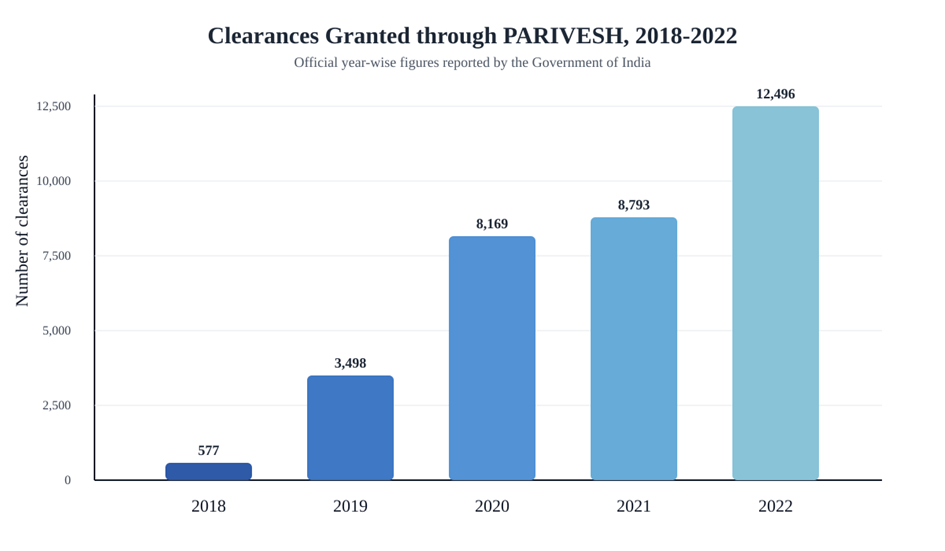
Figure 1 Clearances granted through the Pro-Active and Responsive Facilitation by Interactive, Virtuous and Environmental Single-window Hub, 2018- 2022.
Clearance data accessed through the single-window portal shows that demand for these grants has dramatically increased from 2018 to 2022. This consolidated evidence shows that digital administration has improved the capacity of the system to process requests, and although it does not show increased environmental scrutiny, stronger oversight, or constructive engagement of the public, it does improve situational awareness.[22]
Figure 2 indicates that efficiency must be reconsidered. Average clearing time has improved, but the volume of projects logged shows a negative expansion. In official publications, average clearing time improved to more than 150 days in 2019, 102 in 2020, and, finally, went below 70 days in 2022.[23] The Ministry of Environment, Forest and Climate Change states that there were 519 environmental clearings at the central level in 2024, and the average processing time was 86 days. The importance of the comparison analysed is that while there is a clear administrative fact that time is improving, it cannot be determined whether the legal provisions to safeguard the interests of the clearing process have been maintained.[24]
Administrative caution is warranted even when relying on formalized data. Clearance volumes and disposal durations represent the pace of administrative actions. They do not represent the dedication to a quality appraisal of environmental impacts, the strength of mitigation measures, or the quality of monitoring activities. The absence of thorough review, weak engagement of public dissent, and lack of compliance monitoring may all result in under-reasoned decisions, even when the system is efficient. In the context of constitutional analysis, such efficiency measures may serve to indicate the capacity of administration, but do not demonstrate the sufficiency of environmental safeguards as required by law.[25]
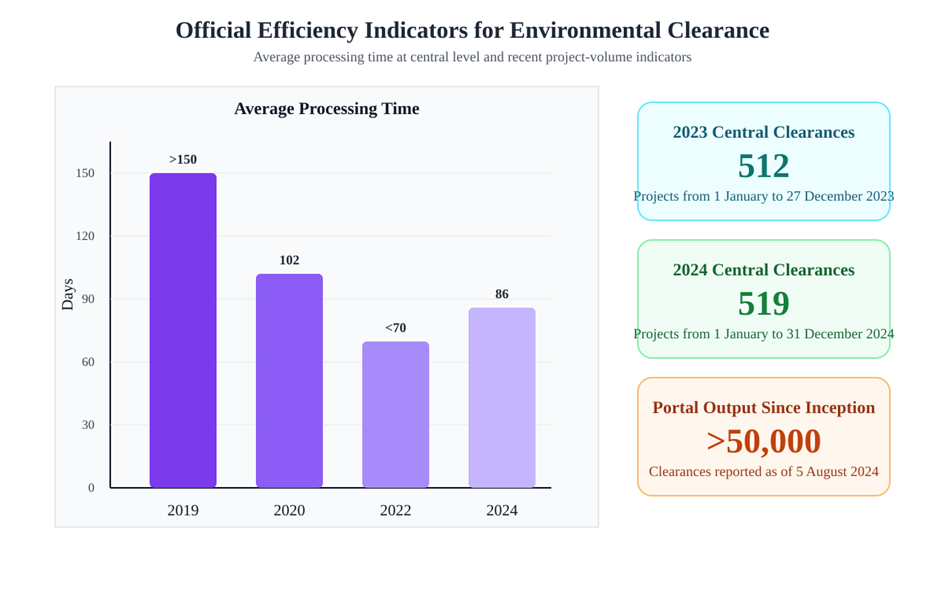
Figure 2. Selected official efficiency indicators for central-level environmental clearance.
Insertable Note: As the number of projects at the central level remains high, official information shows a decrease in the average processing time. An increase in the rate of disposal could indicate an improvement in institutional capacity, but a constitutional review is still warranted to determine whether exemptions, as well as participation and compliance controls, are legally and practically sufficient.
1.4 Dilution, Efficiency and Constitutional Limits
The primary concern is not whether “efficiency” is valued, but the nature of “efficiency” that environmental law can constitutionally provide. The Indian constitutional framework allows a degree of simplification of procedure. However, this can only be to the extent that simplification does not result in a compromise of rational classification, safeguards for the environment, or participatory and compliance controls and the rule-bound nature of environmental governance.[26]
1.4.1 Article 14 and the Problem of Arbitrary Exemptions
Article 14 mandates that environmental classifications and exemptions rely on intelligible differences that uphold the regulatory objective and remain connected with it. In this context, the objective cannot be a broad facilitation of economy, but a legally bounded protection of the environment with the help of a prior assessment. Based on this context, some scholars have connected the evolving environmental procedural rights in India with the non-arbitrariness of administrative and regulatory actions and institutional transparency, as facets of environmental legality. Accordingly, if the executive alters thresholds or exemption categories, it must defend its choice of distinction as intelligible as well as normatively aligned with environmental risks.[27]
This scheme of constitutional protection gains added significance when reforms broadly define project categories or alter regulatory thresholds with opacity regarding a logical justification. The aim is not to make all classifications legally untenable, but the overbroad, poorly drawn and cumulative disregard for environmental impact classifications and exemptions are legally arbitrary. In these scenarios, Article 14 assumes a structural role. It binds the state to defend the omission of regulatory scrutiny for environmental impact for some projects that are comparable to those that will incur environmental impact from projects that are deemed permissible.[28]
Defending environmental classification by simply citing policy flexibility is inadequate. The executive is more often permitted classification by administrative law. Still, environmental regulation deals with constitutionally guaranteed interests regarding health, livelihood, and ecological security. Once that connection is made, reasoned differentiation is more demanding. The State is bound to show that classification is not only administratively feasible, but also environmentally comprehensible. Therefore, Article 14 forbids the language of reform from covering what really may be, a relatively more unfair environmental risk distribution.[29]
1.4.2 Article 21, Sustainable Development and the Precautionary Foundation
Article 21 has been traditionally interpreted to include the environmental dimension of life, health, and security. The Supreme Court of India’s acceptance of the precautionary principle and the sustainable development theory make it evident that environmental administration should act on perceived risks before the damage is beyond repair. Vellore Citizens’ Welfare Forum v. Union of India[30] remains of primary importance as it has constitutionalized ideas which continue to impact the legal framework surrounding the delegation of India’s environmental regulations, including the notion that the costs of ecological disruption and damage be borne by development. According to this line of reasoning, efficiency in and of itself is not a constitutionally problematic feature. Article 21 may not be offended if a quicker process still provides necessary informational content, as well as assessment and conditions that are binding. The constitutionality of the quicker process is problematic if a reform removes or diminishes a stage that serves a precautionary purpose. In that instance, simplification is likely to be a substantive dilution because the legal system prefers its own administrative convenience to the obligation to foresee and mitigate potential environmental injury. The legitimacy of speed, therefore, is a function of what substantive work the expedited process is still able to accomplish.[31]
1.4.3 Public Participation as a Component of Environmental Fairness
There are two roles of public consultation in Environmental Impact Assessment. One is to facilitate decision makers by extending the informational base of their decision. The other is to afford the population, which is potentially impacted by the decision, a voice in the decision. There is a substantial amount of literature on public hearings that demonstrates that the participation that is possible is different for different individuals, depending on their gender, class, and language, as well as the prevailing local institutional flexibility in India.[32] Therefore, it is possible that hearings may be functionally compliant but lack inclusion. That is particularly relevant in the Indian context, which is marked by socially differentiated communities that are the frequent recipients of the environmental burdens, as well as differing ability to access resources and differing ability to move.
One thing all prior Indian studies of hydro projects in Himachal Pradesh, later meta-analyses of public hearings in Gujarat, and doctrinal studies about legitimacy agree upon, is that if authorities treat consultation as a ritual and not as a mechanism for gathering information and providing accountability, participation will ultimately fail. That conclusion is important in light of current reforms.[33] If previous environmental assessments are streamlined as a result of legislative exemptions and/or a revised categorization of projects, the effective space for public participation is further restricted, even if the consultation provisions are not formally amended. Consequently, it is possible that procedural justice can be indirectly weakened, when the number of phases in which the affected individuals and/or groups have an opportunity to provide input, is decreased.
1.5 Recent Judicial Supervision of Environmental Impact Assessment
There is a new distinctive pattern in the decisions of the Supreme Court. The Court has not categorically opposed all forms of administrative optimization, but has expressed a strong preference that exemptions, regularization mechanisms, and adjustable limits be kept within the boundaries of legislative intent, the Constitution, and the environmental rule of law.[34]
1.5.1 Exemptions, Overbreadth and the Discipline of Tailoring
The most thorough recent consideration regarding without limit exemptions is found in Noble M. Paikada v. Union of India[35]. There, the Supreme Court struck down the broad exemption related to the extraction or sourcing of ordinary of earth for linear projects. The importance of the case is that it viewed environmental exemption making from the lens of constitutional analysis for the arbitrariness as opposed to seeing it as an area of policy discretion that is unreviewable. The court, in its decision, indicated that the executive could not rely on rationality of a general developmental goal to replace a legally framed environmental consideration.
The case provides an advanced framework of analysis in relation to the 2024 and 2025 reform. It provides that environmental exemptions must be limited, legally clear, and rationally connected to the purpose of the principal statute. It is not sufficient that a notification is convenient from an administrative perspective. Providing justification for the omission of equivalent regulatory scrutiny must be legally justified. Though it is a strenuous standard, it is by no means unachievable, and will, without a doubt, impact future challenges to reform measures based on the provision of exemptions.[36]
1.5.2 Prior Clearance, Violation Cases and the Resistance to Post Facto Logic
The Court’s opposition to ex post facto environmental approvals persists in the current context. In Alembic Pharmaceuticals Ltd. v. Rohit Prajapati[37], the Supreme Court articulated that ex post facto environmental clearances contradict a system built on ex ante evaluations. The case is significant in that it departs from the facts of the case in that it determines the legal framework of Environmental Impact Assessment as forward looking, as opposed to backward looking. In fact, it continues to bind the administrative mechanisms in a legislative framework seeking to govern the problematic issues that harm the environment, by permitting post facto clearances, or by imposing post facto fines and/or endorsing clearances subject to specific conditions. That framework was anticipated in Goel Ganga Developers India Pvt. Ltd. v. Union of India[38], where the Court dealt strictly with a case where construction was carried on in the absence of valid environmental clearances. In conjunction, these two cases reinforce a more general principle: environmental law cannot make illegal acts legal by imposing clearances ex post facto on illegal construction. If the principle of post facto clearances is integrated within recent legislative reforms, it will reiterate the post facto environmental logic that the Court has consistently opposed. In this case, the Courts safeguards the integrity of the system, along with the order of the system.
1.5.3 Participation, Institutional Reasoning and the 2025 Vanashakti Decisions
In Hanuman Laxman Aroskar v. Union of India[39], participatory and institutional aspects of environmental review were significantly captured. This case insisted that meaningful environmental appraisals be more than rote exercises. Lafarge Umiam Mining Pvt. Ltd. v. Union of India[40] developed some of these ideas further, focusing mainly on the Court’s emphasis on institutional obligations and the transparency of the larger framework of environmental decision-making. These together, from a doctrinal point of view, remain pertinent since the current reforms, more often than not, are defended as neutral administrative improvements, rather than reforms that will disrupt environmental rights.
The 2025 case brought this contradiction even more sharply into focus. In the decision on Vanashakti v. Union of India[41] of 5 August 2025, the Supreme Court upheld most of the 29 January 2025 notification, but struck down Note 1 to Entry 8(a) as arbitrary. Earlier, in another case of Vanashakti v. Union of India[42], the Court of 16 May 2025, had adopted a stringent position against the regularisation of illegality projects; that order was also set aside in Confederation of Real Estate Developers of India (CREDAI) v. Vanashakti[43] on 18 November 2025. Despite the modification, the overall position of the Courts is that the reforms of this nature will be tolerated when judicially they remain narrow, reasoned, and show fidelity to the framework of the environmental law of prevention.
1.6 Conclusion
Indian Environmental Impact Assessment Law has changed recently, showing some accomplishments for the administration, but also showing some of the limits of the constitution for Indian public law. The limits for speed, throughput, and the deregulated entry of projects, cannot be substitutes for Environmental Legality, Environmental Justifications, or for the accountability of the public in the decision-making process.[44]
A possible position for the 2024 and 2025 reforms is the distinction of rationalisation and dilution. The removal of genuinely duplicative approvals is probably lawful if the remaining stages of the process still have the capacity to identify the risks, to impose obligations, and to ensure the local control. In contrast to this, broad exclusions, weakly justified category redesign, or a post facto acceptance of the approval of a projects, would undermine the protective framework of Environmental Impact Assessment. The concern of the constitution is not the reforms themselves. The concern is the reforms that displace previous scrutiny without an equivalent protective mechanism being introduced into the system.[45]
Legal precedent supports that conclusion. The Supreme Court has defended, in a number of cases, the foundational elements of prior appraisal, meaningful participation, reasoned expert review, and the prohibition of arbitrary classifications, even though some degree of administrative discretion has been permitted. Data on official clearances indicate that environmental administration in India has the capacity to work in a time-bound manner. The legitimacy of that speed relies on the incorporation of improved science and more rigorous standards of evaluation, among other things.[46] Environmental governance, in the environmental context of the Environment (Protection) Act, 1986, may be streamlined, but still has to be precautionary.
1.7 Suggestions
The measures listed below, while still maintaining legitimate administrative concerns to reduce delay and duplication, will seek to address the concerns in this analysis, both statutory and constitutional, on environmental approvals.
- Restore Narrowly Tailored Entry Thresholds: The Ministry of Environment, Forest and Climate Change should change broad, categorical exemption language to narrow, risk-based language. If a project class is to be excluded, the notification should describe the scientific rationale, the environmental assumptions, and the safeguards that would remain. This will make future judicial reviews more disciplined and reduce unnecessary uncertainty for both regulators and project proponents.
- Retain Front-End Checks for High-Risk Sectors: Consent rationalization cannot be applied uniformly across all sectors because some sectors are shown to be more detrimental to the environment than others. Urban projects that are extremely detrimental to the environment and that involve land conversion, the use of highly hazardous chemicals, extensive emissions of hazardous materials, intensive use of groundwater, and urban projects with cumulative detrimental effects, should continue to have a decision-making progress checkpoint unless some sort of equivalent scrutiny is shown. Balanced differentiation is preferred over optimization that assumes the same level of environmental risk across all sectors.
- Publish Statement of Reasons with Every Major Relaxation: Significant amendments concerning the framework for the Environmental Impact Assessment should require that a public statement of reasons be drafted. The statement should address the specific environmental issue, the anticipated administrative benefit(s), the potential impact(s) on ecology, and explain the assessment of the proposed changes in relation to Articles 14 and 21. Additionally, a public statement of reasons should help ensure that the assessment is less prone to challenges of arbitrariness.
- Strengthen Post-Clearance Compliance Review: Clearance should be followed by the regular introduction of publicly available compliance dashboards and targeted inspections. The rationale for quicker approval should only be valid if the state can demonstrate compliance with mitigation measures, the waste management regime, and the local environmental regulations. Therefore, the capacity to monitor should be included in the proposed changes, rather than a peripheral administrative concern.
- Reinforce Public Hearing Quality Standards: Local language disclosures, timely summary impact design materials, and articulated response to key concerns should all be incorporated. In terms of recording the hearing, documentation should reflect concerns of the community, addressing how their input was incorporated into the final decision as opposed to listing who was present solely recording the procedural step. Accepting all of the suggestions will impact the overall quality of the information and the legitimacy of Environmental Decisions.
- Create a Cumulative Impact Screen for Urban Projects: Building and area development projects should not be evaluated individually. The combined impact of these projects on drainage, traffic, waste, heat, and the extraction of water and other resources must be evaluated. Applying a cumulative impact threshold to the densely populated urban and peri-urban areas would lessen the tendency to understate the environmental impacts of projects resulting from the fragmentation of projects. It would provide a better match of the urban evaluation to the environmental impacts that construction-heavy areas of the country are experiencing.
- Require Equivalence Testing Before Removing Approvals: When an approval step is eliminated, the amending authority should be required to show equivalence. The notice should explain what the removed step has been replaced with, what information will still be produced and how the enforcement agencies will be able to deal with the change. Without an equivalence test, this will simply become an assumption of the benefits of the proposed law as opposed to a real improvement to the law.
- Improve the Quality of Expert Appraisal Committee Reasoning: Minutes from the expert appraisal committee must contain records of any alternative options considered, any scientific uncertainties that remain, and the reasons for accepting the project mitigations. More considered reasoning would make for a more disciplined review and would improve administrative credibility even in the absence of substantive changes. Reasoned minutes are a low-cost reform that would improve the legal and administrative systems greatly.
- Link Digital Speed with Substantive Transparency: Digital single-window processing must not be used merely to expedite the movement of files. Rather, processing must be designed to improve transparency. Speed must not be prioritized to the point that the opportunity for public scrutiny is lost. Processing must be designed to include searchable project histories, a tracking system for the conditions, hearing records, and compliance updates. Digital reform is best and most easily defended when both processing capacity and access to environmental information are improved.
- Adopt a Structured Constitutional Review Checklist: The government should develop an internal checklist for statutory competence, non-arbitrariness under Article 14, Article 21 pertaining to the protection of the environment, public participation, and the precautionary principle, as a prerequisite to future amendments. This would not stop all the litigation, but it would minimize the risk of the amendments being declared invalid due to poor design or lack of justification. This would also motivate other departments to include constitutional considerations within delegated legislation during the drafting process.
Bibliography
1. Books:
- Divan, S. and Rosencranz, A., Environmental Law and Policy in India: Cases and Materials (Oxford University Press, New Delhi, 3rd edn., 2022).
- Fisher, E., Lange, B., et.al., Environmental Law: Text, Cases, and Materials (Oxford University Press, Oxford, 2nd edn., 2019).
- Jain, M. P., Indian Constitutional Law (LexisNexis, Gurgaon, 9th edn., 2023).
- Leelakrishnan, P., Environmental Law in India (LexisNexis, Gurgaon, 7th edn., 2025).
- Sahasranaman, P. B., Handbook of Environmental Law (Oxford University Press, New Delhi, 2nd edn., 2012).
- Sands, P., Peel, J., et.al., Principles of International Environmental Law (Cambridge University Press, Cambridge, 4th edn., 2018).
2. Statutes:
- The Air (Prevention and Control of Pollution) Act, 1981 (Act No. 14 of 1981)
- The Constitution of India, 1950
- The Environment (Protection) Act, 1986 (Act No. 29 of 1986)
- The Environment Impact Assessment Notification, 2006 (S.O. 1533(E) of 2006)
- The Notification S.O. 523(E), 2025
- The Water (Prevention and Control of Pollution) Act, 1974 (Act No. 6 of 1974)
3. Reports:
- Ministry of Environment, Forest and Climate Change, “Annual Report 2024-25” (2025).
4. Articles:
- Devarhubli, G. and Shrivastava, A., “The Advancement of Environmental Procedural Rights in India: An Analysis of Issues, Problems and Prospects”, 10 Cogent Social Sciences 2312949 (2024).
- Gill, G. N. and Joshi, F., “Environmental Public Hearings and Intersectionality: Women’s Voices from Gujarat, India”, 51 Journal of Law and Society 163 (2024).
- Hegde, M., Patel, K., et.al., “Environmental Clearance Conditions in Impact Assessment in India: Moving Beyond Greenwash”, 40 Impact Assessment and Project Appraisal 214 (2022).
- Paliwal, R. and Srivastava, L., “Adequacy of the Follow-Up Process in India and Barriers to Its Effective Implementation”, 55 Journal of Environmental Planning and Management 191 (2012).
- Sinclair, A. J. and Diduck, A., “Public Involvement in Environmental Impact Assessment: A Case Study of Hydro Development in Kullu District, Himachal Pradesh, India”, 18 Impact Assessment and Project Appraisal 63 (2000).
5. Websites:
- https://parivesh.nic.in/
- https://www.pib.gov.in/PressReleaseIframePage.aspx?PRID=1911130
- https://www.pib.gov.in/Pressreleaseshare.aspx?PRID=2086122
[1] The Environment (Protection) Act, 1986 (Act 29 of 1986), s. 3.
[2] The Environmental Impact Assessment Notification, 2006, S.O. 1533(E), September 14, 2006.
[3] Major Policy Reforms in Environmental Protection, available at: https://www.pib.gov.in/Pressreleaseshare.aspx?PRID=2086122 (last visited on June 9, 2026).
[4] M P Jain, Indian Constitutional Law 151 (LexisNexis, Gurgaon, 9th edn., 2023).
[5] P Leelakrishnan, Environmental Law in India 84 (LexisNexis, Gurgaon, 7th edn., 2025).
[6] The Environment (Protection) Act, 1986 (Act 29 of 1986), s. 3.
[7] Shyam Divan and Armin Rosencranz, Environmental Law and Policy in India: Cases and Materials 132 (Oxford University Press, New Delhi, 3rd edn., 2022).
[8] The Environmental Impact Assessment Notification, 2006, S.O. 1533(E), September 14, 2006.
[9] P Leelakrishnan, Environmental Law in India 116 (LexisNexis, Gurgaon, 7th edn., 2025).
[10] P B Sahasranaman, Handbook of Environmental Law 157 (Oxford University Press, New Delhi, 2nd edn., 2012).
[11] Elizabeth Fisher, Bettina Lange, et.al., Environmental Law: Text, Cases, and Materials 201 (Oxford University Press, Oxford, 2nd edn., 2019).
[12] Philippe Sands, Jacqueline Peel, et.al., Principles of International Environmental Law 218 (Cambridge University Press, Cambridge, 4th edn., 2018).
[13] Comptroller and Auditor General of India, “Performance Audit of Environmental Clearance and Post Clearance Monitoring” 27 (2016).
[14] Ritu Paliwal and Leena Srivastava, “Adequacy of the Follow-Up Process in India and Barriers to Its Effective Implementation”, 55 Journal of Environmental Planning and Management 191 (2012).
[15] Philippe Sands, Jacqueline Peel, et.al., Principles of International Environmental Law 214 (Cambridge University Press, Cambridge, 4th edn., 2018).
[16] Major Policy Reforms in Environmental Protection, available at: https://www.pib.gov.in/Pressreleaseshare.aspx?PRID=2086122 (last visited on June 7, 2026).
[17] P B Sahasranaman, Handbook of Environmental Law 166 (Oxford University Press, New Delhi, 2nd edn., 2012).
[18] Shyam Divan and Armin Rosencranz, Environmental Law and Policy in India: Cases and Materials 118 (Oxford University Press, New Delhi, 3rd edn., 2022).
[19] The Environmental Impact Assessment Notification, 2006, S.O. 1533(E), Entry 8(a), as amended by S.O. 523(E), January 29, 2025.
[20] Mahabaleshwar Hegde, Kirit Patel, et.al., “Environmental Clearance Conditions in Impact Assessment in India: Moving Beyond Greenwash”, 40 Impact Assessment and Project Appraisal 214 (2022).
[21] Over 50,000 Clearances Granted on PARIVESH Portal Since Its Inception, available at: https://www.pib.gov.in/PressReleaseIframePage.aspx?PRID=1911130 (last visited on June 8, 2026).
[22] PARIVESH Portal, available at: https://parivesh.nic.in/ (last visited on June 5, 2026).
[23] Over 50,000 Clearances Granted on PARIVESH Portal Since Its Inception, available at: https://www.pib.gov.in/PressReleaseIframePage.aspx?PRID=1911130 (last visited on June 6, 2026).
[24] Ministry of Environment, Forest and Climate Change, “Annual Report 2024-25” (2025).
[25] Comptroller and Auditor General of India, “Performance Audit of Environmental Clearance and Post Clearance Monitoring” 48 (2016).
[26] M P Jain, Indian Constitutional Law 112 (LexisNexis, Gurgaon, 9th edn., 2023).
[27] Gururaj Devarhubli and Alaukik Shrivastava, “The Advancement of Environmental Procedural Rights in India: An Analysis of Issues, Problems and Prospects”, 10 Cogent Social Sciences 2312949 (2024).
[28] M P Jain, Indian Constitutional Law 114 (LexisNexis, Gurgaon, 9th edn., 2023).
[29] P Leelakrishnan, Environmental Law in India 92 (LexisNexis, Gurgaon, 7th edn., 2025).
[30] (1996) 5 SCC 647.
[31] Shyam Divan and Armin Rosencranz, Environmental Law and Policy in India: Cases and Materials 306 (Oxford University Press, New Delhi, 3rd edn., 2022).
[32] Gitanjali Nain Gill and Falguni Joshi, “Environmental Public Hearings and Intersectionality: Women’s Voices from Gujarat, India”, 51 Journal of Law and Society 163 (2024).
[33] A John Sinclair and Alan Diduck, “Public Involvement in Environmental Impact Assessment: A Case Study of Hydro Development in Kullu District, Himachal Pradesh, India”, 18 Impact Assessment and Project Appraisal 63 (2000).
[34] P Leelakrishnan, Environmental Law in India 143 (LexisNexis, Gurgaon, 7th edn., 2025).
[35] 2024 INSC 241.
[36] Elizabeth Fisher, Bettina Lange, et.al., Environmental Law: Text, Cases, and Materials 242 (Oxford University Press, Oxford, 2nd edn., 2019).
[37] (2020) 17 SCC 157.
[38] 2018 SCC OnLine SC 930.
[39] (2019) 15 SCC 401.
[40] (2011) 7 SCC 338.
[41] 2025 INSC 961.
[42] 2025 INSC 718.
[43] 2025 INSC 1326.
[44] Shyam Divan and Armin Rosencranz, Environmental Law and Policy in India: Cases and Materials 351 (Oxford University Press, New Delhi, 3rd edn., 2022).
[45] Comptroller and Auditor General of India, “Performance Audit of Environmental Clearance and Post Clearance Monitoring” 63 (2016).
[46] Ministry of Environment, Forest and Climate Change, “Annual Report 2024-25” (2025).